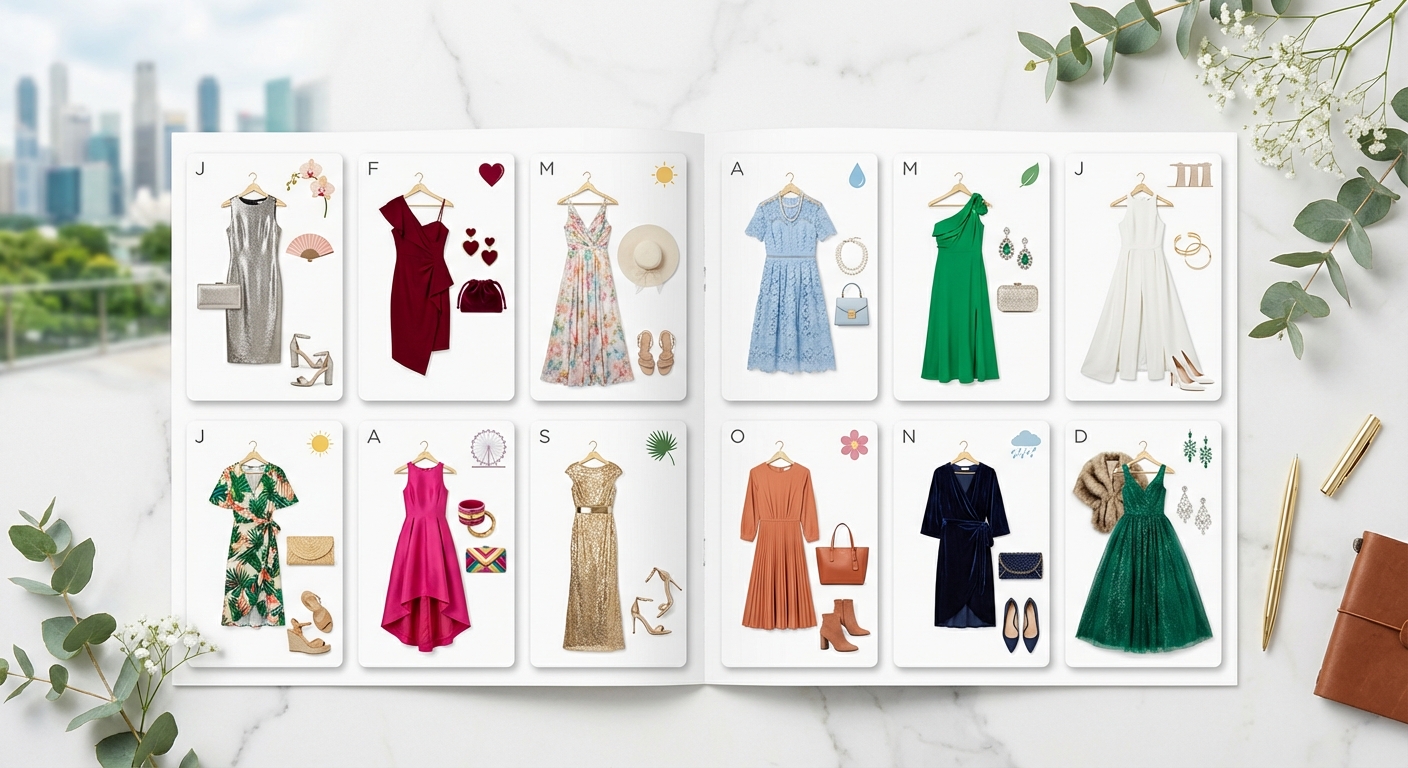
You’ve received four wedding invitations this year and they’re all in different months. The March one says garden ceremony. The November one is a ballroom dinner. And you’re starting to panic because your wardrobe wasn’t built for this many formal events.
Singapore’s wedding season runs year-round, but certain months see more celebrations than others. Each season brings different weather patterns, venue types, and styling challenges that affect what you should wear.
Choosing a wedding guest outfit Singapore requires balancing tropical humidity, cultural expectations, and dress codes. This guide breaks down monthly weather patterns, fabric choices, and styling strategies so you can look polished at every celebration without buying a new outfit each time. Renting designer pieces saves money and closet space while keeping you appropriately dressed.
Understanding Singapore’s wedding calendar patterns
Singapore doesn’t have a traditional wedding season like temperate countries. Couples get married throughout the year, but certain months are more popular.
Peak wedding months typically include May, June, November, and December. These periods avoid major public holidays and school exam seasons. Chinese couples often consult the lunar calendar for auspicious dates, creating clusters of weddings during specific weekends.
The Southwest Monsoon affects June to September with occasional heavy rain. The Northeast Monsoon runs from December to March, bringing cooler temperatures and more consistent rainfall. Your outfit needs to work with these weather patterns, not against them.
Monthly outfit strategies for Singapore weddings
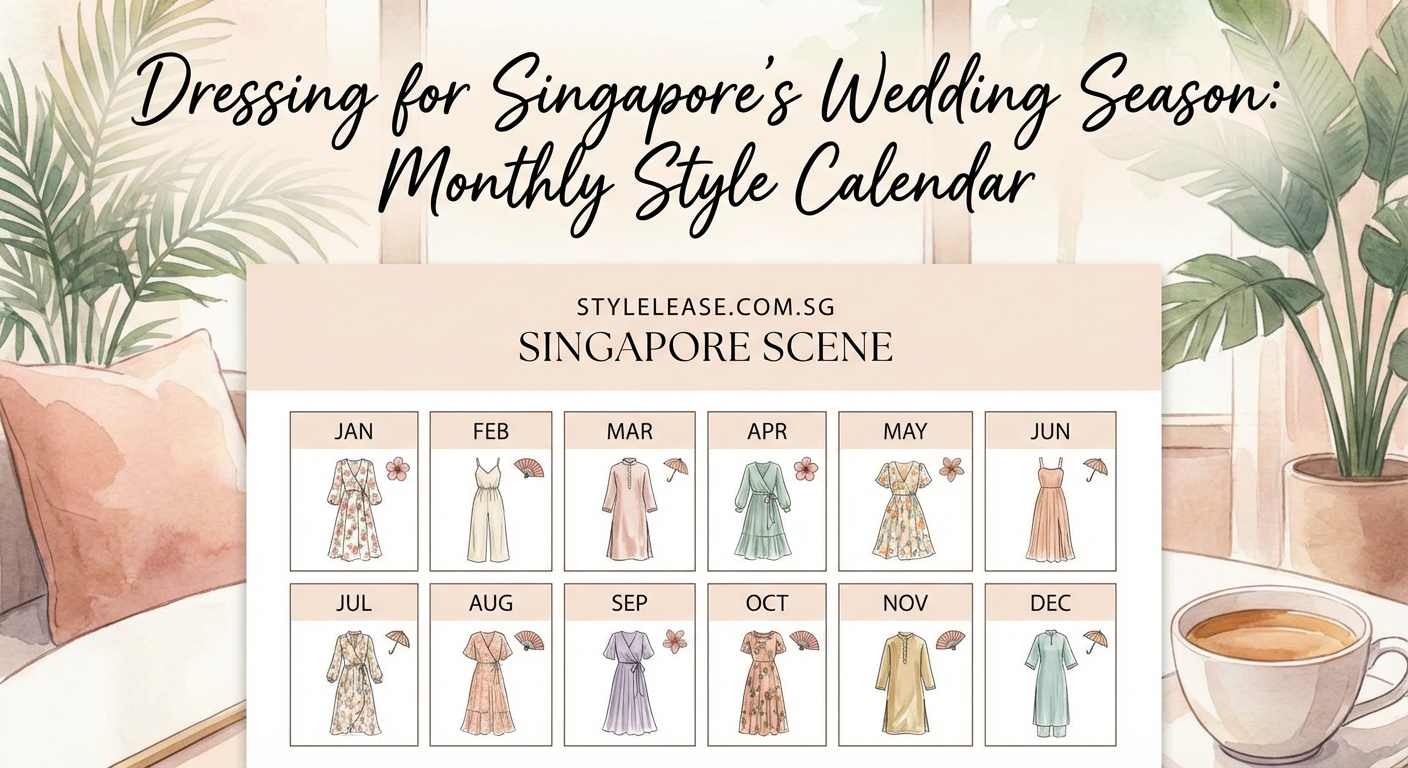
January to March
These months bring slightly cooler temperatures, averaging 25 to 30 degrees Celsius. Morning and evening events feel more comfortable, but midday ceremonies still get warm.
This is the best time for:
- Midi-length dresses in structured fabrics
- Long sleeves without overheating
- Jewel tones and deeper colours
- Heavier embellishments and beading
Garden weddings scheduled during this period work well with garden party glamour dressing for outdoor events in Singapore’s climate that balances style with practical weather considerations.
April to June
Heat and humidity peak during these months. Temperatures climb to 32 degrees regularly. Afternoon weddings become endurance tests if you’re not dressed appropriately.
Choose breathable fabrics like silk, chiffon, and lightweight cotton blends. Avoid synthetic materials that trap heat. Sleeveless or cap-sleeve designs work better than long sleeves.
Pastel shades and lighter colours reflect heat better than dark tones. Save your navy and burgundy pieces for evening receptions in air-conditioned ballrooms.
July to September
Monsoon rains create unpredictable weather. You might face sunshine and downpours within the same afternoon. This affects both outfit choice and backup planning.
Practical considerations include:
- Bring a lightweight shawl or jacket for over-air-conditioned venues
- Choose shoes that won’t be ruined by unexpected rain
- Pack your outfit in a garment bag if travelling to the venue
- Have a backup pair of shoes in your car
The ultimate packing list styling essentials when you rent a gown covers everything you need for weather contingencies.
October to December
Wedding season intensifies. You’ll likely attend multiple celebrations during these months. The weather cools slightly, and December brings festive energy that influences styling choices.
This period suits:
- Richer fabrics like velvet and brocade
- Metallic accents and statement jewellery
- Darker colour palettes
- More formal silhouettes
Year-end weddings often have elevated dress codes. Cocktail attire decoded what it really means for Singapore events helps you interpret invitations correctly.
Navigating cultural dress codes across communities
Singapore’s multicultural society means wedding dress codes vary significantly. What’s appropriate for a Chinese banquet differs from a Malay reception or Indian celebration.
Chinese weddings typically avoid wearing white, black, or red as a guest. White competes with the bride, black suggests mourning, and red is reserved for the bridal party. Opt for jewel tones, pastels, or metallics instead.
Malay weddings often request modest attire. Cover your shoulders and knees. Flowing maxi dresses or elegant tunics with trousers work well. Bring a shawl to cover bare arms during religious portions of the ceremony.
Indian weddings embrace colour and embellishment. This is your chance to wear vibrant hues, intricate beading, and statement jewellery. Avoid wearing black or white. Sarees, lehengas, or heavily embellished dresses suit the festive atmosphere.
“The biggest mistake I see is guests underdressing for Indian weddings or overdressing for casual garden ceremonies. When in doubt, ask the couple or check if other guests have posted outfit photos from their previous events.” – Wedding stylist with 12 years of Singapore experience
Fabric choices that survive tropical humidity
Not all beautiful fabrics work in Singapore’s climate. Some materials look stunning but become uncomfortable within minutes of stepping outside.
| Fabric Type | Humidity Performance | Best For | Avoid When |
|---|---|---|---|
| Silk | Excellent breathability | All-day comfort | Heavy rain risk |
| Chiffon | Very breathable | Outdoor ceremonies | Windy venues |
| Linen | Natural cooling | Daytime events | Wrinkles easily |
| Cotton blends | Good airflow | Casual weddings | Formal evening events |
| Polyester | Poor breathability | Never ideal | Any outdoor portion |
| Velvet | Traps heat | Evening air-con venues | Daytime or outdoor |
The 5 eco-friendly fabrics to look for when renting your next gown explains sustainable options that also perform well in tropical weather.
Building a rental rotation strategy
Attending multiple weddings each year makes buying new outfits financially impractical. A typical formal dress costs $200 to $800. Multiply that by four or five weddings and you’ve spent thousands on clothes you’ll rarely wear again.
Renting solves this problem while giving you access to designer pieces. Here’s how to build a strategic rental rotation:
- Book your rental 2-3 weeks before each wedding to secure your preferred style
- Choose different silhouettes for consecutive weddings to avoid repetition in photos
- Mix designer brands so your Instagram feed doesn’t look monotonous
- Select versatile colours that photograph well in various lighting conditions
The how much does it really cost to rent designer dresses in Singapore breakdown shows you’ll save 60-80% compared to purchasing.
Colour strategies that photograph beautifully
Wedding photos last forever. Your outfit will appear in albums, social media posts, and framed prints. Certain colours photograph better than others under different lighting conditions.
Evening ballroom lighting favours rich, saturated colours. Deep emerald, sapphire, burgundy, and metallics look stunning under warm yellow lights. Pale pastels can wash out in these settings.
Outdoor garden ceremonies work best with softer tones. Blush pink, sage green, lavender, and champagne complement natural lighting without competing with greenery.
The 5 gown colours that photograph beautifully at evening galas provides specific shade recommendations for different skin tones.
Accessories that complete your look without overdoing it
The right accessories elevate a simple dress into a memorable outfit. The wrong ones make you look like you’re trying too hard.
For daytime weddings, keep jewellery minimal. Small earrings and a delicate bracelet or ring are enough. Your dress should be the focal point, not your accessories.
Evening receptions allow for more drama. Statement earrings, a bold clutch, or eye-catching shoes add personality. But follow the rule of one: choose one statement piece and keep everything else subtle.
Practical accessories matter too:
- A compact clutch that fits your phone, cards, and lipstick
- Comfortable shoes you can wear for 4-5 hours
- A light shawl for over-air-conditioned venues
- Blotting papers for humidity control
- A small umbrella during monsoon months
Common outfit mistakes to avoid
Even experienced wedding guests make styling errors. These mistakes happen frequently enough that they’re worth addressing directly.
Wearing white or cream unless explicitly requested. Some modern brides choose colourful gowns and ask guests to wear white, but this is rare. Default to assuming white is off-limits.
Choosing uncomfortable shoes because they look good. You’ll be standing, walking, and possibly dancing for hours. Blisters ruin your evening and show in photos when you’re grimacing.
Ignoring the venue when selecting your outfit. A beaded gown makes sense for a luxury hotel ballroom but looks out of place at a casual beach ceremony. The what to wear to a Singapore wedding a complete guest dress guide covers venue-specific considerations.
Overdressing for the dress code. If the invitation says smart casual, don’t show up in a floor-length gown. You’ll feel uncomfortable and look like you didn’t read the invitation properly.
Sustainable choices that reduce fashion waste
The average formal dress gets worn 1.7 times before being relegated to the back of the wardrobe. This creates enormous textile waste and financial inefficiency.
Renting addresses both problems. You wear beautiful designer pieces without the environmental impact of fast fashion or the cost of luxury purchases you’ll rarely use.
Singapore generates over 168,000 tonnes of textile waste annually. Most formal wear ends up in landfills after minimal use. The how long does a designer dress actually last in landfill reveals the shocking environmental impact.
Choosing rental over purchase means:
- Reduced manufacturing demand for single-use formal wear
- Extended garment lifecycles through multiple wearers
- Access to higher quality pieces that last longer
- Less closet clutter and storage waste
The sustainable wedding fashion why renting your bridal gown is the eco-conscious choice explains how this applies to all wedding-related fashion choices.
Designer brands that work for Singapore weddings
Certain designers consistently create pieces that suit Singapore’s climate, cultural diversity, and wedding aesthetic. These brands appear frequently in rental collections because they solve multiple styling challenges.
Zimmermann offers feminine silhouettes with breathable fabrics and romantic details. The Australian brand understands tropical weather and creates pieces that photograph beautifully. The why Zimmermann dresses are worth every dollar even when you rent explains their popularity.
Self-Portrait combines elegance with modern design. Their signature lace pieces work for multiple cultural contexts and dress codes. The ultimate guide to renting Self-Portrait lace dresses in Singapore covers styling options.
Needle & Thread creates ethereal gowns with delicate embellishments. Their pieces suit romantic garden ceremonies and formal ballroom receptions equally well.
Aje delivers contemporary Australian design that resonates with Singapore’s fashion-forward crowd. The rise of Aje why this Aussie brand dominates Singapore’s wedding circuit tracks their growing influence.
Planning your outfit timeline
Last-minute outfit scrambles create unnecessary stress. A simple timeline prevents panic and ensures you look your best.
4-6 weeks before: Confirm the dress code, venue, and timing. Research the location to understand if it’s indoor, outdoor, or mixed. Check weather forecasts for historical patterns during that month.
3-4 weeks before: Browse rental options and shortlist 3-5 dresses that suit the occasion. Consider your recent outfit posts on social media to avoid repetition. Book a fitting appointment if the rental service offers one.
2-3 weeks before: Finalize your rental booking. Confirm delivery or pickup dates. Plan your accessories, shoes, and bag. Test your complete outfit at home, including walking and sitting.
1 week before: Arrange backup options for weather contingencies. Pack emergency items like safety pins, fashion tape, and stain remover. Confirm your rental pickup or delivery details.
Day before: Pick up or receive your rental. Try everything on one final time. Prepare your accessories and emergency kit. Check the weather forecast and adjust plans if needed.
When to choose rental over purchase
Rental makes sense for most wedding guest situations, but some scenarios favour purchasing instead. Understanding when each option works best saves money and reduces waste.
Rent when:
- You attend formal events infrequently
- The dress code is very specific
- You want designer pieces at accessible prices
- You’re attending multiple weddings in a short period
- You have limited storage space
Purchase when:
- You attend formal events monthly or more
- You’ve found a versatile piece that works for multiple occasions
- The cost per wear drops below rental rates
- You have specific fit requirements that make rental difficult
The should you rent or buy your wedding dress a practical comparison for Singapore brides provides a detailed cost analysis framework.
Making rental work for your schedule
Rental logistics require more planning than pulling something from your closet. But the process becomes simple once you understand the timeline.
Most rental services offer 3-5 day rental periods. This gives you time to receive the dress, wear it to the event, and return it without rushing.
Book during off-peak periods when possible. Weekday weddings and less popular months offer better availability and sometimes lower rates. Peak wedding weekends in November and December get booked quickly.
Plan for potential alterations. While rental dresses come in standard sizes, minor adjustments might be needed. Some services include basic alterations, others charge extra. Factor this into your timeline.
The your first designer dress rental a complete step-by-step guide for Singapore beginners walks through the entire process.
Your wedding guest wardrobe sorted
Singapore’s year-round wedding season doesn’t have to mean constant outfit stress or mounting closet clutter. Understanding monthly weather patterns, cultural expectations, and strategic rental timing gives you a framework for looking polished at every celebration.
Start with the wedding date and work backwards. Consider the venue, check historical weather for that month, and choose fabrics that perform well in tropical conditions. Rent designer pieces that photograph beautifully and suit the specific dress code. Keep accessories simple and practical.
Your next wedding invitation doesn’t need to trigger panic. You now have the tools to choose appropriate, comfortable, and stunning outfits without buying pieces you’ll rarely wear again.
Leave a Reply