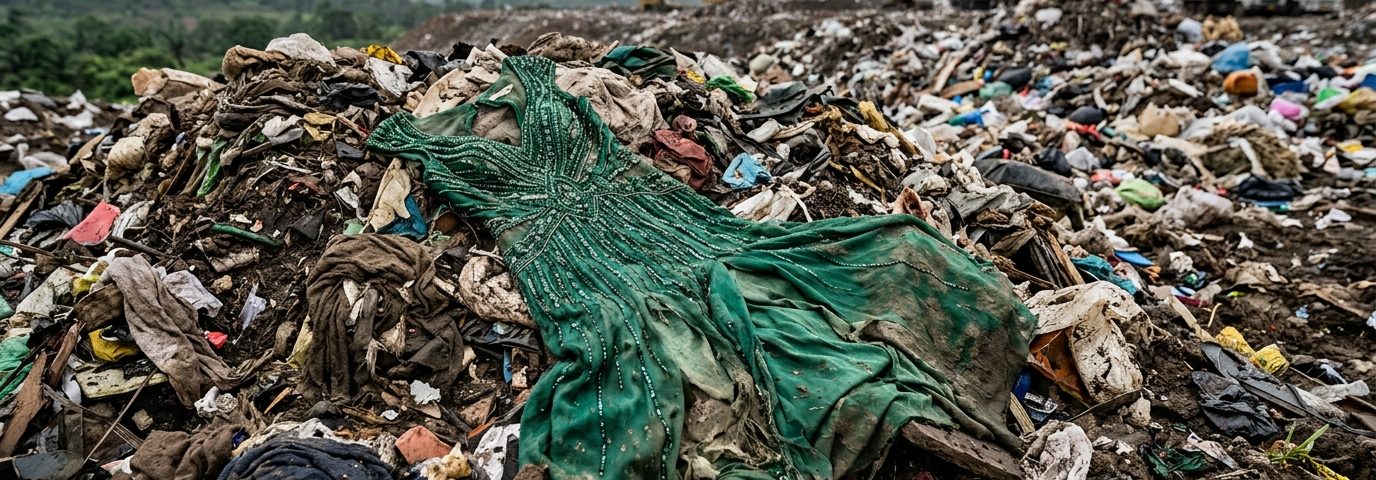
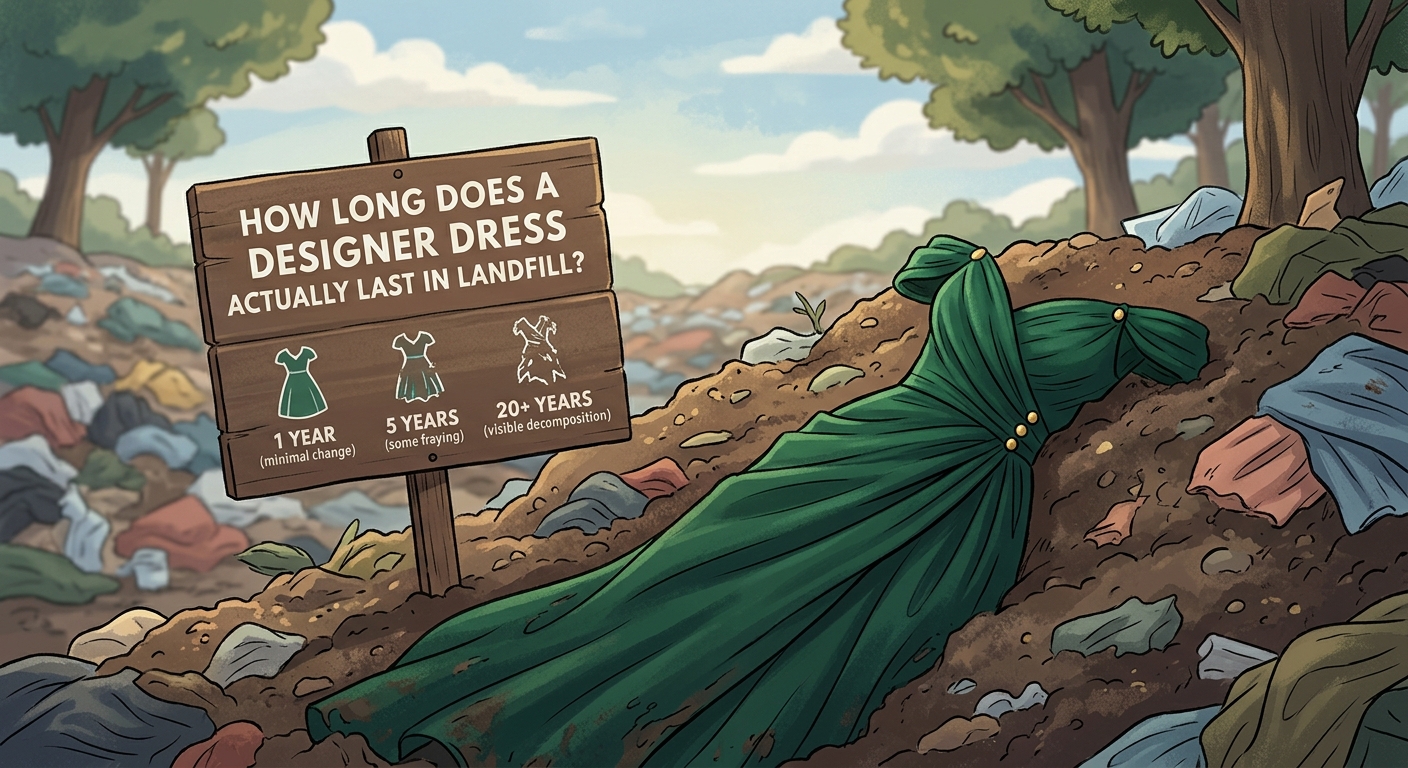
That designer dress you wore once and never touched again? It’s probably still hanging in your wardrobe, waiting for a second life. But if it ended up in a landfill instead, it would outlive you, your children, and possibly your grandchildren. The truth about textile waste is uncomfortable, but understanding it is the first step toward making better fashion choices.
Most clothing takes decades to centuries to decompose in landfill. Natural fibres like cotton break down in 1 to 5 months, whilst synthetic materials like polyester can persist for 20 to 200 years. Blended fabrics, embellishments, and dyes complicate decomposition further. Renting designer pieces instead of buying reduces textile waste significantly, offering a practical solution for environmentally conscious consumers in Singapore.
Understanding the Landfill Reality for Different Fabrics
Not all fabrics are created equal when it comes to decomposition. The material composition determines how long a garment will sit in landfill, slowly releasing greenhouse gases as it breaks down.
Natural fibres decompose faster than synthetics, but even they face challenges in oxygen-starved landfill environments.
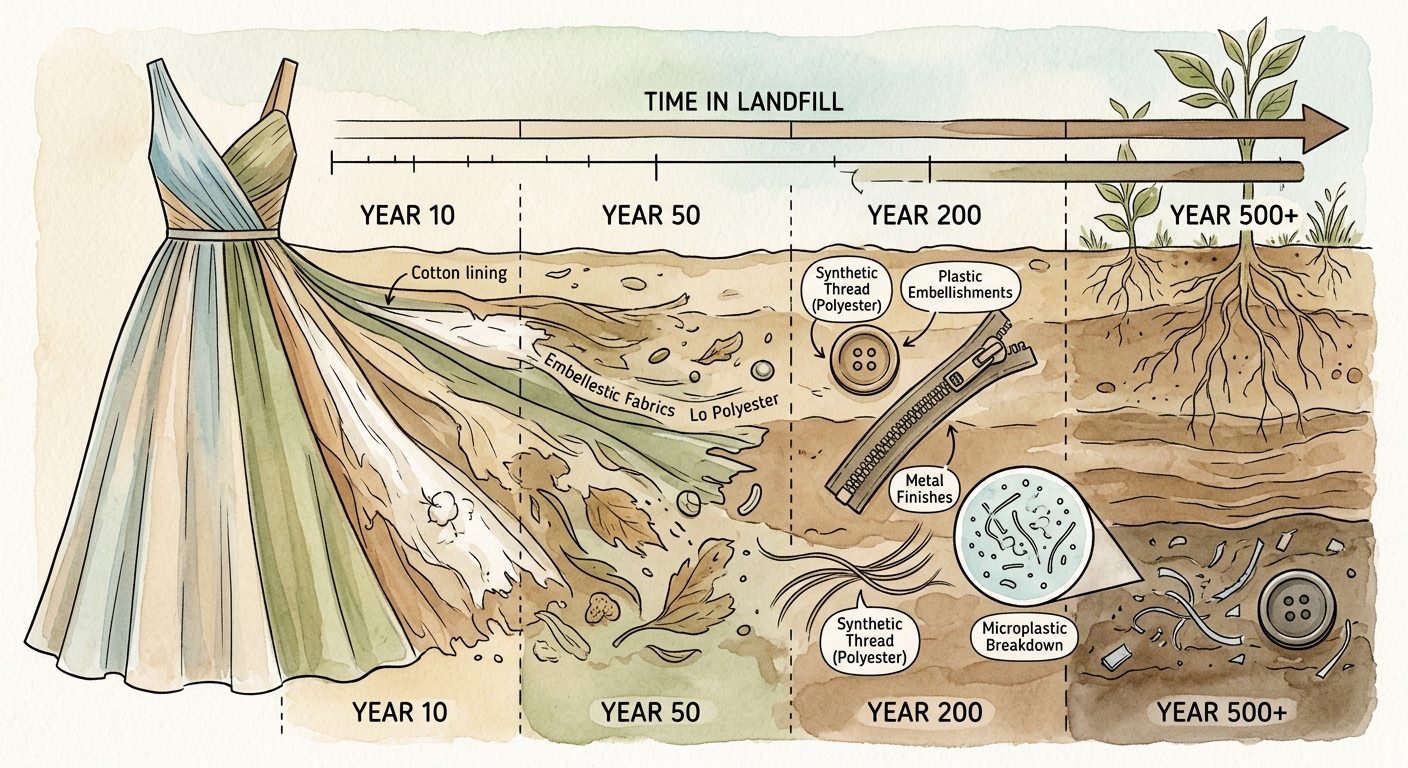
Cotton clothing, one of the most common natural fibres, takes anywhere from 1 to 5 months to decompose under ideal conditions. But landfills are far from ideal. Compacted layers of waste create anaerobic environments where bacteria struggle to break down organic matter efficiently.
Linen breaks down even faster, typically within 2 weeks to 2 months. Wool takes longer, ranging from 1 to 5 years depending on the weave and treatment.
Then there are synthetics. Polyester, nylon, and acrylic are petroleum-based plastics that can take 20 to 200 years to decompose. Some estimates push that timeline even further.
Spandex and elastane? They essentially never break down completely. Those stretchy leggings and form-fitting dresses will outlast multiple human generations.
| Fabric Type | Decomposition Time | Environmental Impact |
|---|---|---|
| Linen | 2 weeks to 2 months | Low, but requires water-intensive farming |
| Cotton (100%) | 1 to 5 months | Moderate, releases methane in landfill |
| Wool | 1 to 5 years | Moderate, biodegradable but slow |
| Silk | 1 to 4 years | Low to moderate, natural protein fibre |
| Denim | 10 to 12 months | Moderate, often treated with chemicals |
| Nylon | 30 to 40 years | High, petroleum-based synthetic |
| Polyester | 20 to 200 years | Very high, microplastic shedding |
| Spandex/Elastane | Never fully decomposes | Extremely high, permanent pollution |
Why Landfills Slow Down Decomposition
You might think tossing a cotton dress in the bin is harmless because cotton is natural. But landfills don’t work like compost heaps.
Modern landfills are engineered to contain waste, not accelerate decomposition. They’re lined with clay and plastic to prevent contamination of groundwater. Waste gets compacted into dense layers with minimal oxygen flow.
Without oxygen, organic materials undergo anaerobic decomposition. This process is slower and produces methane, a greenhouse gas 25 times more potent than carbon dioxide over a 100-year period.
Even biodegradable fabrics contribute to climate change when they break down in landfills. The methane released during decomposition escapes into the atmosphere unless the landfill has gas capture systems.
Singapore’s Semakau Landfill, our only remaining landfill, is projected to reach capacity by 2035. Every piece of clothing we discard takes up precious space in this finite resource.
The Hidden Problem with Blended Fabrics
Walk into any high street store and check the labels. Most garments aren’t 100% cotton or 100% polyester. They’re blends.
A dress might be 60% cotton and 40% polyester. A blouse could be 70% viscose and 30% nylon. These blends offer practical benefits like stretch, durability, and wrinkle resistance.
But they create a decomposition nightmare.
The natural fibres will eventually break down, leaving behind a web of synthetic threads. These synthetic remnants persist indefinitely, fragmenting into microplastics that contaminate soil and water.
Recycling blended fabrics is nearly impossible with current technology. Separating cotton from polyester at the fibre level requires complex chemical processes that aren’t economically viable at scale.
This is where why renting designer dresses is the most sustainable fashion choice in Singapore becomes relevant. Rental models keep garments in circulation longer, reducing the number of blended pieces that end up in landfill.
What Happens to Embellishments and Hardware
That sequined party dress? The sequins are typically made from PVC plastic. They’ll never decompose.
Beading, rhinestones, metallic threads, and decorative hardware add another layer of complexity. These elements don’t break down at the same rate as the base fabric, if at all.
Zippers contain metal and plastic components. Buttons can be plastic, metal, or natural materials like shell or wood. Each component has its own decomposition timeline.
When a garment finally breaks down, these elements remain. They become contaminants in the soil, potentially leaching chemicals as they slowly degrade.
“The fashion industry produces 92 million tonnes of textile waste annually. Most of this waste contains mixed materials and chemical treatments that complicate decomposition and recycling efforts. The solution isn’t just about choosing natural fibres, it’s about reducing consumption altogether.” — Environmental researcher
The Chemical Treatment Factor
Raw cotton might decompose in months, but finished cotton clothing is a different story.
Fabrics undergo extensive chemical treatments during manufacturing. Dyes, fixatives, water repellents, flame retardants, and anti-wrinkle finishes all affect decomposition rates.
Some dyes contain heavy metals like chromium, lead, and cadmium. These don’t break down. They accumulate in soil and can enter the food chain through plants grown in contaminated areas.
Formaldehyde-based treatments, commonly used to prevent wrinkling, can persist for years. They slowly release into the environment as the fabric breaks down.
Even “eco-friendly” dyes and treatments can slow decomposition compared to untreated fibres. The chemicals alter the fabric structure, making it harder for bacteria and fungi to break down the fibres.
How Fast Fashion Amplifies the Problem
The average Singaporean buys 34 new clothing items per year. Many of these pieces are worn fewer than five times before being discarded.
Fast fashion brands produce clothing designed for short-term use. The quality is lower, the fabrics are cheaper, and the lifespan is intentionally brief.
This creates a constant stream of textile waste. Clothes that could have lasted years are replaced within months. The sheer volume overwhelms donation systems and recycling programmes.
When you buy a $30 polyester dress, wear it twice, and throw it away, you’re committing to 200 years of environmental impact for a few hours of use.
The true cost of fast fashion what every Singaporean woman should know goes beyond the price tag. It’s measured in landfill space, methane emissions, and persistent pollution.
Better Alternatives to Landfill Disposal
Before a garment reaches landfill, several better options exist.
-
Donate wearable items to charity shops, shelters, or community programmes. Organisations like The Salvation Army and Dress for Success Singapore accept gently used clothing.
-
Sell through secondhand platforms like Carousell, Refash, or Style Tribute. Someone else’s wardrobe refresh can be your decluttering solution.
-
Repair and repurpose damaged items. A skilled tailor can transform outdated pieces into something wearable. Even scraps can become cleaning rags or craft materials.
-
Use textile recycling bins placed around Singapore by organisations like H&M and The Salvation Army. These collect clothing in any condition for recycling or downcycling.
-
Choose rental over purchase for special occasion wear. A dress worn once for a wedding doesn’t need to occupy your wardrobe or landfill space forever.
The rental model extends the life of each garment significantly. A single designer dress can be worn by dozens of people over several years, maximising its utility before disposal becomes necessary.
Making Smarter Wardrobe Decisions
Understanding decomposition timelines should inform your purchasing decisions.
When you do buy, prioritise quality over quantity. A well-made garment from natural fibres will serve you longer and break down more cleanly when its life ends.
Check labels for fibre content. Aim for 100% natural fibres when possible, or high percentages of natural content in blends.
Consider the garment’s full lifecycle. Will you wear it at least 30 times? Can it be styled multiple ways? Does it fit your actual lifestyle, not an aspirational version of it?
For special occasions, renting makes environmental and financial sense. Why buy a gown you’ll wear once when you can rent designer pieces for a fraction of the cost?
Whether you need something for what to wear to a Singapore wedding a complete guest dress guide or cocktail attire decoded what it really means for Singapore events, rental services provide access to high-quality options without the long-term storage or disposal burden.
The Role of Care and Maintenance
How you care for clothing affects both its lifespan and its eventual decomposition.
Washing garments in cold water with eco-friendly detergents reduces chemical buildup in fabrics. This makes them easier for microorganisms to break down later.
Air drying instead of tumble drying preserves fibre integrity. Heat breaks down natural fibres faster, shortening garment life and altering decomposition rates.
Proper storage prevents damage from moths, mildew, and sunlight. Clothes that last longer in your wardrobe mean fewer items entering the waste stream.
When you rent designer pieces, professional cleaning and maintenance are included. This ensures each garment stays in circulation as long as possible, maximising environmental efficiency.
What Singapore Is Doing About Textile Waste
Singapore’s Zero Waste Masterplan includes targets for reducing textile waste. The National Environment Agency encourages donation, repair, and recycling over disposal.
Several initiatives support textile circularity. The Extended Producer Responsibility scheme will require fashion brands to take responsibility for end-of-life garment management.
Textile recycling technology is advancing. Chemical recycling processes can break down blended fabrics into base components for remanufacturing, though these systems aren’t yet widespread.
Community programmes like repair cafes and clothing swaps promote extended garment life. These grassroots efforts complement government policy.
But individual action remains crucial. Every decision to rent instead of buy, repair instead of replace, or donate instead of discard contributes to reducing textile waste.
Practical Steps You Can Take Today
Start by auditing your current wardrobe. Identify pieces you haven’t worn in a year. These are candidates for donation or sale.
Before buying anything new, ask yourself three questions:
- Do I already own something similar?
- Will I wear this at least 30 times?
- Can I rent this instead?
For event dressing, explore rental options first. Services like StyleLease offer designer pieces for a fraction of retail prices, with professional cleaning included.
Learn basic repair skills. Sewing on a button or fixing a hem takes minutes and extends garment life significantly.
Support brands committed to sustainability. Look for companies using natural fibres, ethical production, and take-back programmes.
When disposal is necessary, use textile recycling bins rather than general waste bins. Even worn-out clothing can be downcycled into insulation, cleaning cloths, or other products.
Why Rental Fashion Solves Multiple Problems
Rental addresses the decomposition problem at its source by reducing the number of garments produced.
When multiple people share one dress over its lifetime, fewer dresses need to be manufactured. This reduces raw material extraction, water usage, chemical pollution, and eventual waste.
High-quality rental pieces are made to last. They’re constructed from better materials and designed for repeated wear, unlike fast fashion items meant for brief use.
Professional care extends garment life beyond what individual owners typically achieve. Commercial cleaning, proper storage, and expert repairs keep pieces in circulation longer.
For customers, rental offers variety without accumulation. You can wear 5 gown colours that photograph beautifully at evening galas without filling your wardrobe with single-use pieces.
The model also makes designer quality accessible. Wearing well-made garments from sustainable brands becomes financially viable through rental, encouraging better fashion choices.
Your Wardrobe, Your Impact
Every garment in your wardrobe represents a future decomposition timeline. That polyester dress is a 200-year commitment. That cotton tee is a few months, but only if it reaches the right environment.
The fashion industry won’t change overnight, but your choices create immediate impact. Each rental instead of purchase, each repair instead of replacement, each donation instead of disposal shifts the system toward sustainability.
Singapore’s limited landfill space makes these choices even more critical. We’re literally running out of room for waste. The clothes you choose today determine the environmental legacy you leave tomorrow.
Start small. Rent your next event outfit. Repair that favourite dress instead of replacing it. Choose natural fibres when you do buy. These actions compound over time, reducing your contribution to textile waste while maintaining a wardrobe you love.
The 200-year dress doesn’t have to be your story. Make choices today that your future self, and the planet, will thank you for.