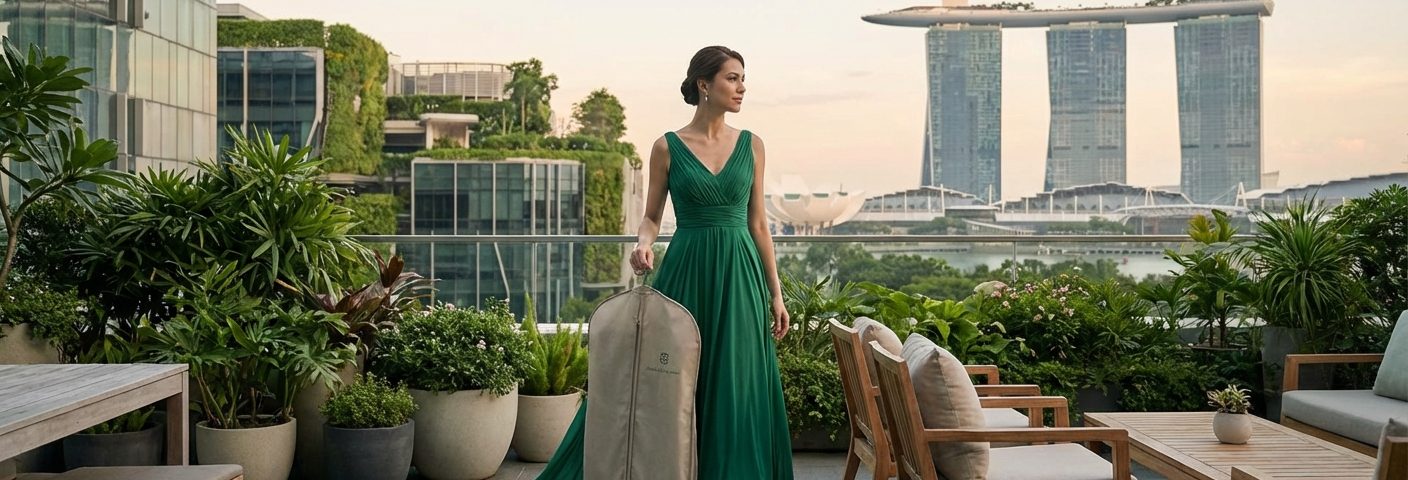
Singapore’s fashion scene thrives on newness. Wedding invitations pile up, corporate galas fill calendars, and social feeds demand constant outfit rotation. But here’s the uncomfortable truth: the average Singaporean discards 168 kilograms of textile waste annually, and most of those pieces were worn fewer than five times. That stunning gown collecting dust in your wardrobe? It’s part of a global crisis where fashion produces 10% of humanity’s carbon emissions. The good news is that sustainable fashion Singapore isn’t about sacrificing style or settling for less. It’s about wearing what you love without the environmental guilt.
Sustainable fashion Singapore centres on rental models that reduce textile waste, carbon emissions, and wardrobe clutter whilst providing access to designer pieces. By renting instead of buying, environmentally conscious women can wear premium brands for every occasion, cut their fashion footprint by up to 70%, and contribute to Singapore’s circular economy without compromising personal style or budget.
Why Singapore’s Fashion Culture Needs a Sustainable Shift
Singapore’s tropical climate and packed social calendar create unique fashion pressures. You need different outfits for Chinese New Year gatherings, Deepavali celebrations, Hari Raya open houses, corporate functions, and weekend brunches. Buying new for each event becomes expensive and wasteful.
Fast fashion brands promise affordability, but the hidden costs are staggering. A single cotton dress requires 2,700 litres of water to produce. That’s enough drinking water for one person for 900 days. Synthetic fabrics shed microplastics into our oceans with every wash. And when you’re done with that dress after two wears? It likely ends up in Semakau Landfill, Singapore’s only remaining landfill that’s projected to reach capacity by 2035.
The fashion rental model flips this wasteful cycle. One designer dress rented 30 times throughout its lifecycle prevents 29 purchases. That’s 29 fewer items manufactured, shipped, and eventually discarded. For Singapore’s space-constrained homes, it also means 29 fewer pieces cramming your already full wardrobe.
How Rental Fashion Reduces Environmental Impact
Renting clothes isn’t just about saving money. It’s about maximising the utility of every garment produced. Here’s how the numbers break down:
Carbon footprint reduction: Manufacturing accounts for the majority of a garment’s environmental impact. When you rent, you’re spreading that initial carbon cost across dozens of wearers instead of bearing it alone for occasional use.
Water conservation: Textile production is water-intensive. Cotton farming, dyeing processes, and finishing treatments consume billions of litres annually. Rental models reduce demand for new production, directly cutting water usage.
Chemical pollution prevention: Fashion manufacturing relies on toxic dyes, bleaches, and finishing agents. Fewer new garments mean fewer chemicals entering waterways. This matters especially in Singapore, where we import most textiles from regions with less stringent environmental regulations.
Waste diversion: The average rented dress stays in circulation for two to three years, worn by multiple customers. Compare that to purchased formal wear, which typically sees one to three wears before permanent wardrobe retirement.
| Environmental Metric | Traditional Purchase | Rental Model |
|---|---|---|
| Average wears per garment | 3-5 times | 25-40 times |
| Carbon emissions per wear | 100% of production cost | 3-4% of production cost |
| Wardrobe space required | Permanent storage | Zero long-term storage |
| End-of-life disposal | Individual responsibility | Professional recycling/upcycling |
The Financial Case for Sustainable Fashion Choices
Sustainability and savings aren’t mutually exclusive. Renting designer pieces costs a fraction of retail prices whilst delivering the same aesthetic impact.
A Self-Portrait lace dress retails for $800 to $1,200. Rental prices start around $80 to $150 for a weekend. You get the Instagram moment, the wedding photos, and the confidence boost without the four-figure commitment. For women attending multiple events yearly, the savings multiply fast.
Consider this scenario: You have six formal events this year. Buying six new dresses at an average of $300 each costs $1,800. Renting six designer pieces at $120 each costs $720. That’s $1,080 saved, and you’ve worn higher-quality brands than you would have purchased outright.
The what to wear to a Singapore wedding dilemma becomes simpler when you’re not locked into permanent purchases. You can choose seasonally appropriate colours, experiment with trends, and match dress codes without financial anxiety.
How to Build a Sustainable Wardrobe in Singapore
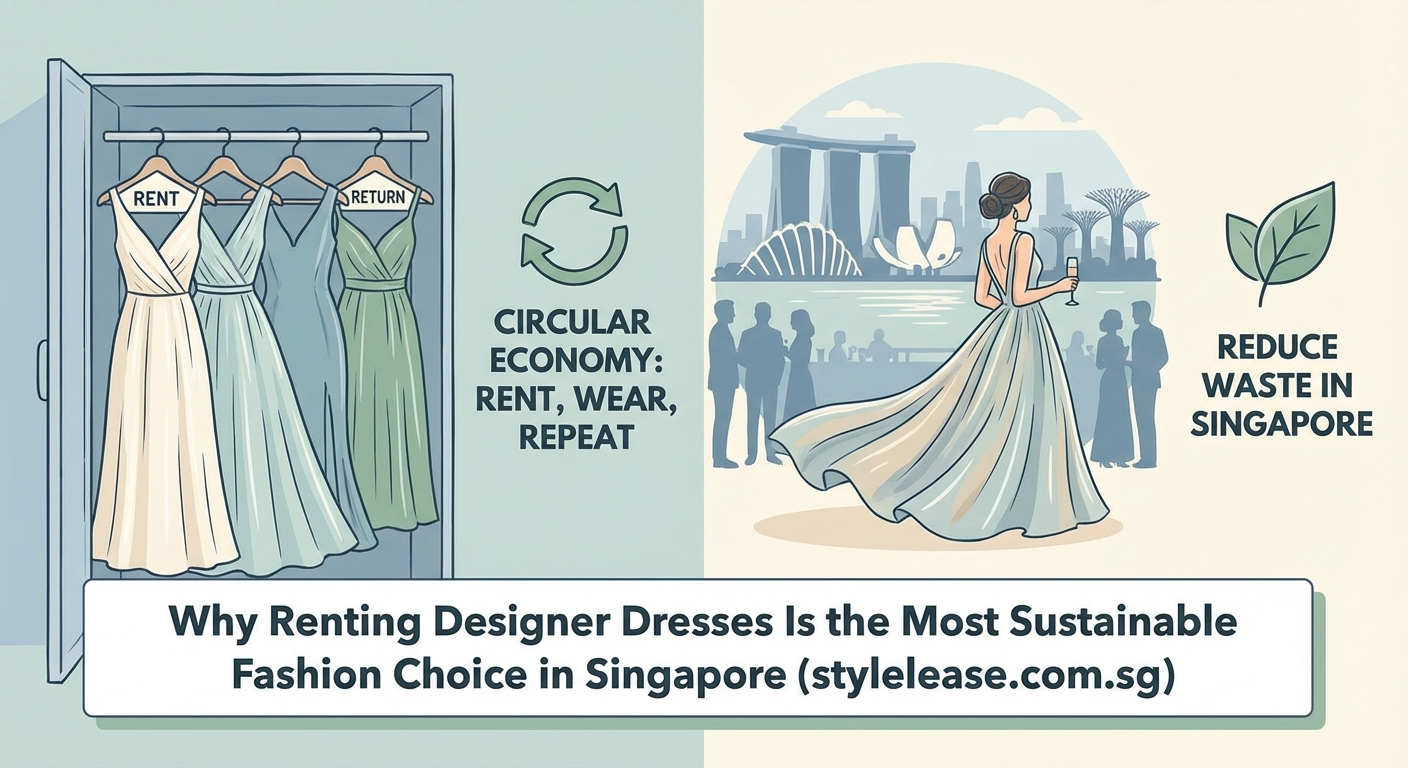
Transitioning to sustainable fashion Singapore doesn’t require an overnight wardrobe purge. Start with these practical steps:
-
Audit your current wardrobe: Identify pieces you haven’t worn in six months. Be honest about what you’ll realistically wear again. Formal dresses, statement gowns, and trend-driven pieces are prime rental candidates.
-
Calculate your cost per wear: Divide each garment’s purchase price by the number of times you’ve worn it. That $400 dress worn twice costs $200 per wear. Renting a similar piece for $100 suddenly looks sensible.
-
Identify your rental occasions: Wedding guest attire, gala events, corporate functions, and special celebrations are perfect rental opportunities. Save purchases for everyday basics and true wardrobe staples.
-
Choose quality rental providers: Look for services offering designer brands, professional cleaning between rentals, and flexible booking terms. The platform’s sustainability practices matter as much as the clothes themselves.
-
Plan ahead for events: Book rentals two to three weeks before your event. This gives you time to try pieces, request alterations if needed, and arrange backup options.
-
Care for rented pieces responsibly: Treat rentals like borrowed treasures. Avoid smoking areas, be careful with makeup application, and follow care instructions. This extends each garment’s lifecycle for future renters.
Common Sustainable Fashion Mistakes to Avoid
Even well-intentioned sustainable fashion choices can backfire. Watch out for these pitfalls:
Greenwashing traps: Brands claiming “eco-friendly” credentials whilst maintaining exploitative production practices. Look for transparent supply chains and third-party certifications, not just marketing buzzwords.
Over-renting: Renting pieces you don’t actually need defeats the purpose. Sustainable fashion means consuming less overall, not just shifting your consumption method.
Ignoring garment care: Poor treatment of rented items shortens their lifecycle, forcing earlier replacement and negating environmental benefits. Handle rentals with care.
Forgetting about basics: Not everything should be rented. Invest in quality basics you’ll wear repeatedly. Sustainable fashion balances rental special-occasion pieces with durable everyday staples.
Impulse rental decisions: Just because it’s cheaper than buying doesn’t mean you need it. Rent with intention, not impulse.
Designer Access Without Designer Waste
Luxury brands like Zimmermann, Needle & Thread, and Aje create beautiful pieces designed to last. But their price points put them out of reach for many Singaporean women. Rental models democratise access whilst maintaining the exclusivity these brands represent.
You can wear a Zimmermann dress to your friend’s garden wedding without the $1,500 investment. The dress gets worn, appreciated, and photographed, then returns to circulation for another wearer. The brand maintains its prestige, you get your moment, and the environment avoids another single-use purchase.
This model particularly suits Singapore’s climate challenges. Delicate fabrics and intricate details require careful storage in our humidity. Professional rental services handle climate-controlled storage, expert cleaning, and minor repairs. You enjoy the dress at its best without the maintenance burden.
“The most sustainable garment is the one already in existence. By maximising each piece’s wearability across multiple users, rental models honour the resources invested in creating beautiful clothes whilst minimising new production demands.”
Styling Rental Pieces for Maximum Impact
Renting doesn’t mean sacrificing personal style. Strategic accessorising and smart styling choices make rented pieces feel uniquely yours.
For corporate events, pair a classic rental dress with your own statement jewellery and shoes. The dress provides the foundation; your accessories add personality.
Understanding cocktail attire expectations helps you select appropriate rental pieces that photograph well and feel comfortable throughout multi-hour events.
Consider styling one rental dress multiple ways by changing accessories, layering pieces, and adjusting hair and makeup. This extends value whilst reducing your overall rental frequency.
The Social Shift Towards Rental Culture
Singapore’s younger generations increasingly prioritise experiences over ownership. This mindset shift aligns perfectly with rental fashion models.
Social media accelerates outfit fatigue. When your entire network sees your dress on Instagram, rewearing feels less appealing. Rental culture removes this pressure. You can wear stunning pieces, share your photos, and return the dress without guilt or wardrobe clutter.
The stigma around renting has evaporated. Admitting you rented your gown now signals environmental consciousness and financial savvy, not budget constraints. It’s a conversation starter, not a secret.
Wedding culture particularly benefits from this shift. Bridesmaids no longer need to purchase dresses they’ll never wear again. The ultimate guide to renting your wedding dress shows even brides embracing rental options for pre-wedding events, after-parties, and destination ceremonies.
Measuring Your Fashion Footprint
Understanding your environmental impact helps you make informed choices. Here’s what to track:
- Wardrobe turnover rate: How many pieces do you buy and discard annually?
- Cost per wear: Are you getting value from purchases, or do items sit unworn?
- Occasion-specific needs: How many events require special attire you won’t rewear?
- Storage constraints: Is wardrobe space forcing premature disposal of viable clothes?
Most Singaporean women attend 8 to 12 formal events yearly. If even half of those become rental opportunities instead of purchases, you’ve cut your fashion footprint significantly whilst likely improving your outfit quality.
Supporting Singapore’s Circular Fashion Economy
Every rental transaction supports local businesses building sustainable infrastructure. Professional cleaning services, alteration specialists, logistics providers, and customer service teams all contribute to Singapore’s circular economy.
This creates jobs whilst reducing environmental impact. It’s a model that scales. As more women choose rental options, the industry can invest in better sustainability practices, expanded selections, and improved services.
Local rental platforms understand Singapore’s unique needs. They stock appropriate sizes for Asian body types, offer pieces suited to our climate, and schedule deliveries around our public holidays and event seasons.
Beyond Dresses: Expanding Sustainable Fashion Choices
Whilst formal wear represents the most obvious rental opportunity, sustainable fashion Singapore extends further.
Handbags, jewellery, and accessories also suit rental models. That designer clutch you’d use twice a year? Rent it. The statement necklace perfect for one specific dress? Rent it.
Maternity wear represents another ideal category. Your body changes rapidly during pregnancy, and those clothes have a defined expiration date. Renting maternity pieces makes financial and environmental sense.
Even everyday clothing rental services are emerging, offering capsule wardrobes on rotation. This suits minimalists and frequent travellers who value variety without ownership.
What Singapore’s Sustainable Fashion Future Looks Like
Government initiatives, business innovation, and consumer demand are converging to reshape Singapore’s fashion landscape.
The Singapore Green Plan 2030 includes circular economy targets. Fashion rental directly supports these goals by extending product lifecycles and reducing waste.
Technology enables better matching between renters and garments. Virtual try-on tools, detailed sizing guides, and AI-powered recommendations reduce rental returns and improve satisfaction.
Local designers are creating rental-specific collections. These pieces feature durable construction, timeless aesthetics, and easy-care fabrics that withstand multiple wearers whilst maintaining beauty.
Making Sustainable Choices That Actually Work
Sustainable fashion Singapore isn’t about perfection. It’s about progress.
You don’t need to rent everything or never buy again. Start with high-impact changes. Rent that gown for your evening gala instead of buying. Choose quality basics that last years instead of fast fashion that falls apart after three washes.
Build a packing list of styling essentials that work with multiple rented pieces. Your own shoes, jewellery, and bags create consistency whilst the dress provides variety.
Consider Singapore’s climate when selecting pieces. Garden party attire requires breathable fabrics and practical cuts. Renting lets you choose appropriately without long-term commitment.
Your Wardrobe, Reimagined
Sustainable fashion Singapore represents more than environmental responsibility. It’s about freedom from wardrobe overwhelm, financial flexibility, and access to beauty without burden.
The dresses hanging unworn in your wardrobe represent resources consumed, money spent, and space occupied. Rental models free you from this cycle whilst elevating your style options.
Start small. Choose one upcoming event and rent instead of buying. Notice how it feels to wear something stunning without the purchase commitment. Pay attention to the compliments, the photos, and the satisfaction of returning the dress without guilt.
Your choices matter. Every rental supports sustainable infrastructure, reduces manufacturing demand, and proves that fashion can be both beautiful and responsible. Singapore’s fashion future isn’t about sacrifice. It’s about smarter choices that benefit your wardrobe, your wallet, and our shared environment.