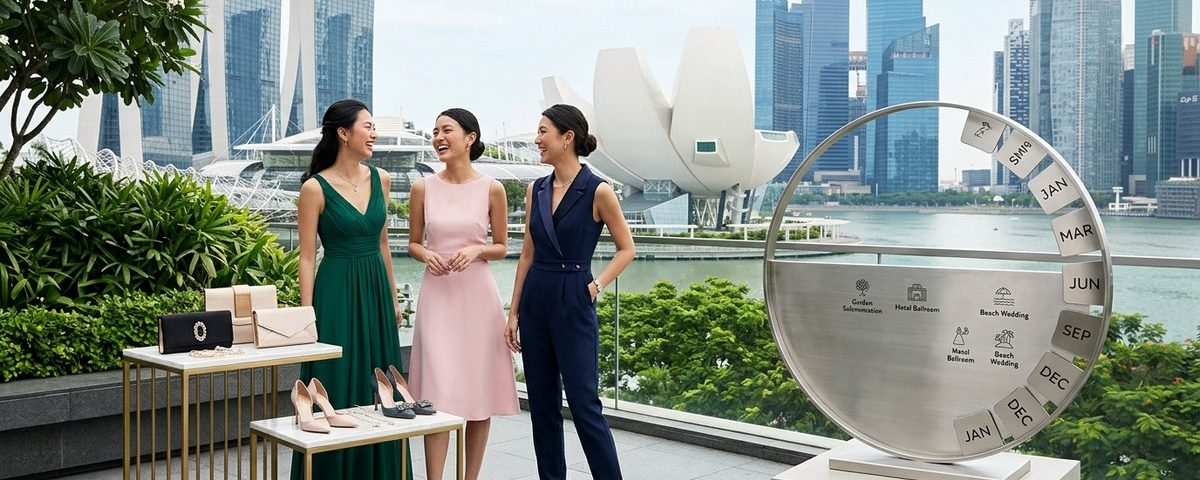
You’ve just received another wedding invitation. The date is circled on your calendar, but your wardrobe feels completely inadequate for Singapore’s wedding season. Between unpredictable weather, cultural expectations, and the pressure to look Instagram-ready without breaking the bank, choosing the right outfit can feel overwhelming.
Singapore wedding guests need to consider month-specific weather patterns, cultural dress codes, and venue types when selecting outfits. Renting designer pieces offers access to appropriate styles for each season while respecting traditions around colour choices, modesty levels, and formality. Strategic planning around our climate ensures comfort without sacrificing style, making every wedding appearance memorable for the right reasons.
Understanding Singapore’s wedding season patterns
Singapore doesn’t follow traditional four-season calendars, but our wedding patterns are surprisingly predictable.
Peak wedding months cluster around February, March, June, November, and December. Chinese couples often consult the lunar calendar for auspicious dates, while others book around public holidays to maximise guest attendance.
The monsoon season from November to January brings afternoon downpours. The hot months from April to August test even the most breathable fabrics. Understanding these patterns helps you select what to wear to wedding Singapore events throughout the year.
Your outfit strategy needs to shift month by month. A velvet gown perfect for December feels suffocating in July. Lightweight chiffon ideal for outdoor May ceremonies looks out of place at formal November ballroom dinners.
January and February outfit considerations
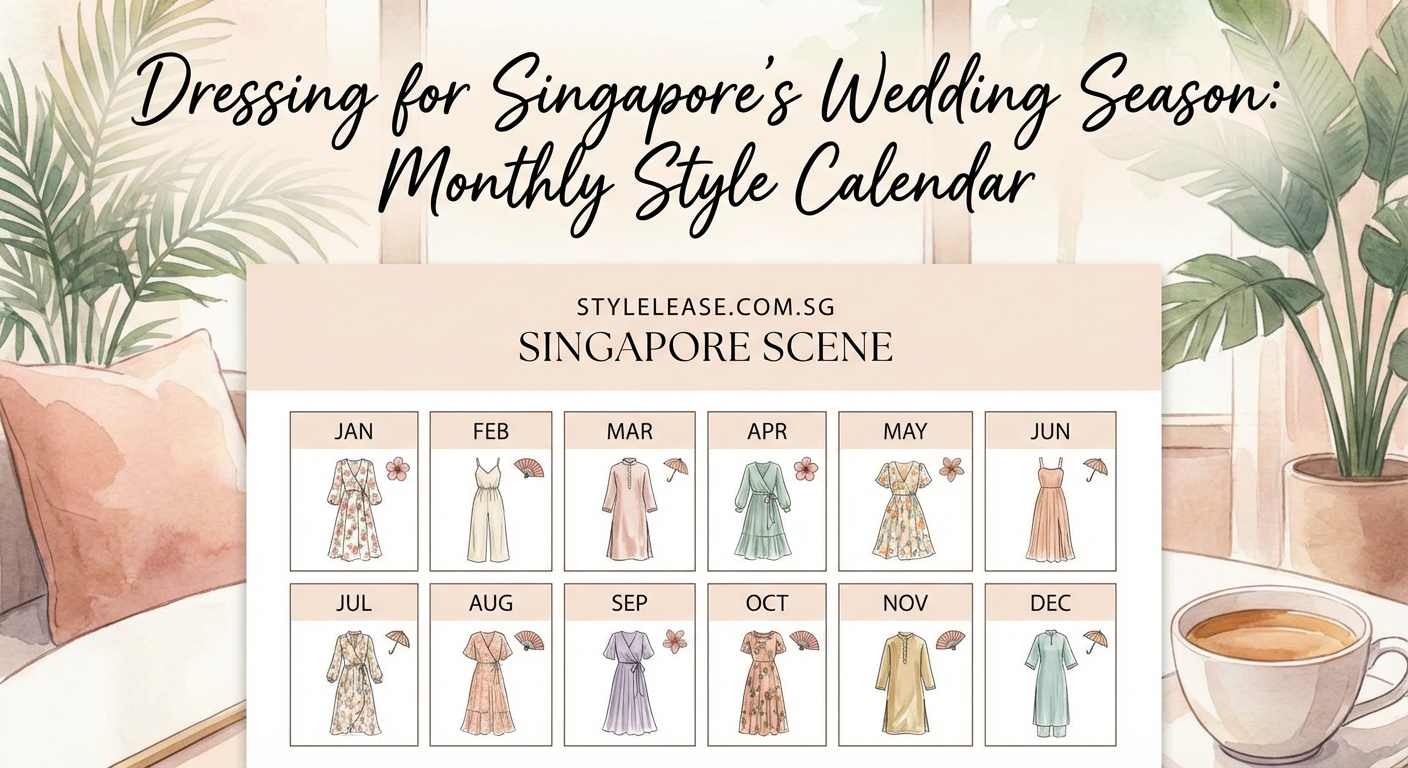
These months bring cooler evening temperatures, making them ideal for richer fabrics and deeper tones.
Humidity drops slightly during this period. You can finally wear that structured midi dress without feeling like you’re melting. Satin, crepe, and even light wool blends become viable options.
Chinese New Year influences February weddings heavily. Red remains the bride’s colour at traditional ceremonies, so guests should avoid wearing predominantly red outfits. Jewel tones work beautifully: emerald, sapphire, amethyst, and topaz all photograph well and respect cultural sensitivities.
Indoor hotel ballrooms dominate this season. Air conditioning runs strong, so bring a wrap or structured blazer. Your bare shoulders will thank you.
Consider these fabric choices for early-year weddings:
- Structured crepe that holds its shape in air conditioning
- Satin with enough weight to drape elegantly
- Ponte knit for comfort during long banquet dinners
- Jacquard for added texture without bulk
March through May styling strategies
The transitional months bring unpredictable weather. Morning sunshine can turn into afternoon storms within hours.
Garden and outdoor venues become popular as temperatures rise but haven’t peaked yet. Your outfit needs to handle both heat and potential rain. Waterproof footwear isn’t glamorous, but arriving with muddy heels is worse.
Lighter colours start appearing in wedding palettes. Pastels, soft neutrals, and floral prints suit spring-themed celebrations. Avoid pure white or ivory, which can photograph too similarly to bridal gowns.
Midi lengths work particularly well during these months. They’re formal enough for evening receptions but practical for outdoor ceremonies where grass and uneven terrain present challenges.
“April and May weddings in Singapore require the most versatile wardrobe planning. I always recommend having a backup outfit option if the venue has both indoor and outdoor components.” – Senior stylist at a leading Singapore rental house
Navigating the hot months from June to August
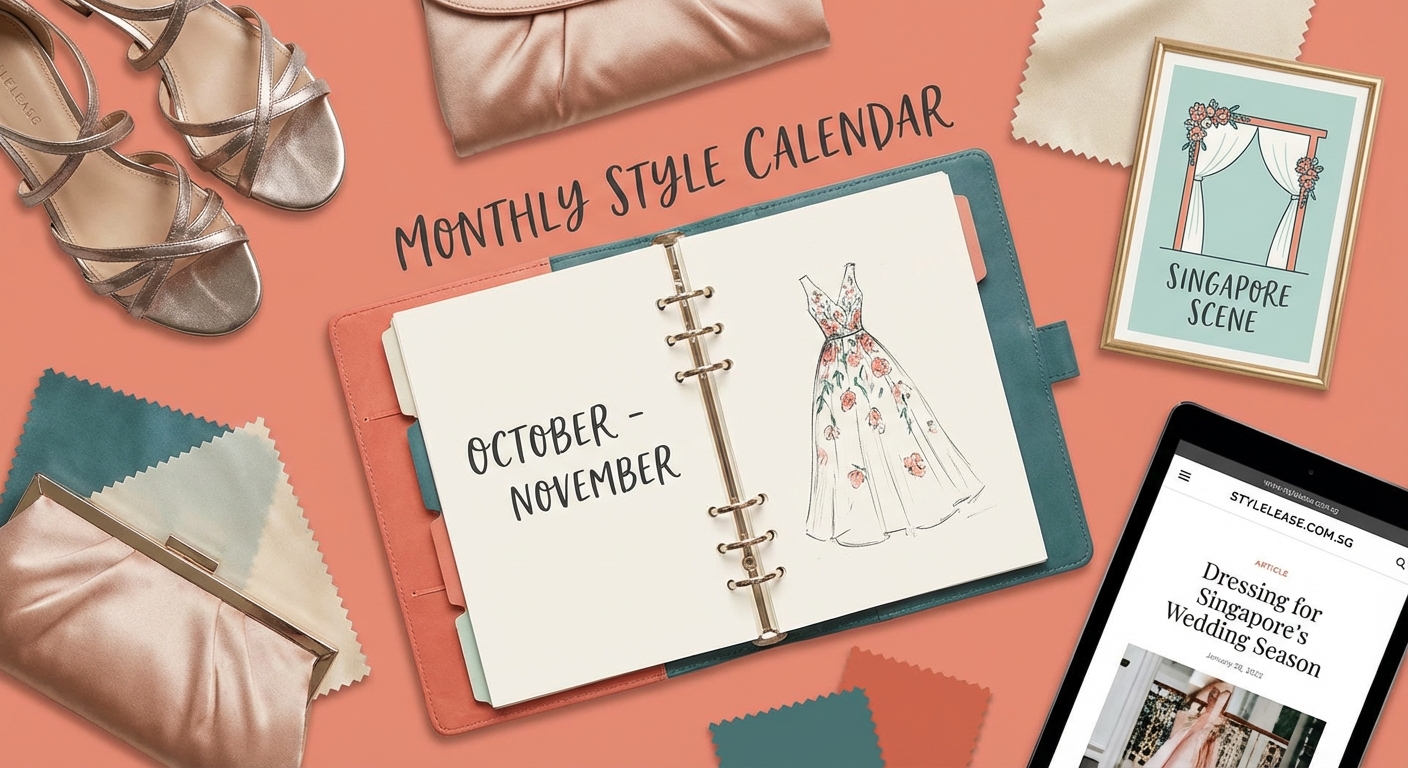
Peak heat arrives. Outdoor afternoon ceremonies become endurance tests.
Your fabric choices make or break your comfort level. Cotton blends, linen, and lightweight silk allow air circulation. Synthetic materials that trap heat will leave you miserable before the first course arrives.
Shorter hemlines become more acceptable at casual and semi-formal weddings. Tea-length and knee-length dresses provide relief while maintaining appropriate coverage. For cocktail attire decoded dress codes, these lengths hit the sweet spot.
Colour psychology matters more during hot months. Dark colours absorb heat, making you feel warmer. Light and bright colours reflect sunlight, keeping you cooler. Navy, burgundy, and forest green can work if the fabric is breathable enough.
September and October wedding wardrobe planning
School holidays end. Wedding season picks up again as families return from summer travels.
Weather remains hot but slightly less intense than peak summer months. You can start incorporating richer colours back into your wardrobe without suffering.
This period sees diverse wedding styles. Beach clubs, rooftop bars, and traditional hotel ballrooms all host ceremonies. Your wardrobe needs flexibility.
Statement sleeves and interesting necklines add visual interest without requiring heavy embellishment. These design elements photograph beautifully and create memorable looks without adding fabric weight.
For outdoor venues, consider these practical additions:
- Comfortable block heels or wedges that won’t sink into grass
- A lightweight shawl that provides sun protection during ceremonies
- Blotting papers and setting spray for makeup touch-ups
- A small umbrella that fits in your clutch
November and December festive season styling
The most popular wedding months arrive. Venues book out months in advance.
Cooler evenings return, opening up your fabric options considerably. Velvet, brocade, and heavier satins become wearable again. Metallics and sequins suit the festive atmosphere without looking overdone.
Year-end weddings often feature more elaborate dress codes. “Black tie optional” and “formal” appear more frequently on invitations. Understanding gown colours that photograph beautifully becomes essential for these elevated affairs.
December weddings frequently incorporate holiday themes. Deep reds, forest greens, and metallics align with seasonal aesthetics while avoiding the bride’s spotlight.
Cultural considerations across all months
Singapore’s multicultural landscape means wedding guests navigate diverse traditions throughout the year.
Chinese weddings typically request guests avoid wearing black or white. Red remains reserved for the bride at traditional ceremonies, though modern couples may relax this rule for evening receptions.
Malay weddings often prefer modest coverage. Sleeves, higher necklines, and longer hemlines show respect. Vibrant colours are welcomed and encouraged.
Indian weddings embrace bold colours and elaborate embellishments. Guests can wear brighter, more ornate outfits than they would to other cultural ceremonies. Avoiding white or black remains important, as these colours hold specific cultural meanings.
| Cultural Context | Colours to Avoid | Preferred Coverage | Embellishment Level |
|---|---|---|---|
| Traditional Chinese | Red, white, black | Moderate | Subtle to moderate |
| Malay | White, black | High (covered shoulders, longer hemlines) | Moderate |
| Indian | White, black | Moderate | Bold and elaborate welcomed |
| Western | White, ivory, cream | Varies by venue | Depends on formality |
The rental advantage for Singapore’s wedding season
Buying multiple wedding outfits each year drains your budget and closet space.
Renting solves both problems. You access designer pieces appropriate for each month’s specific requirements without the commitment of ownership. A Zimmermann dress perfect for garden parties in March gets returned before you need a structured gown for December’s ballroom affair.
Rental services understand Singapore’s wedding landscape. They stock appropriate options for various cultural ceremonies and seasonal requirements. You’re not guessing whether a dress will work; you’re selecting from curated collections designed for local conditions.
The sustainability angle matters too. Singapore’s wedding season generates significant fashion waste. Guests buy dresses worn once, then relegated to closet corners. Renting reduces environmental impact while maintaining your style standards.
Practical booking timeline for each season
Planning ahead separates stressed guests from prepared ones.
For peak months (February, June, November, December), book rental pieces 6-8 weeks ahead. Popular styles and sizes disappear fast during wedding season rushes.
Off-peak months (January, July, August, October) offer more flexibility. Booking 3-4 weeks ahead usually secures your preferred options.
If you’re attending multiple weddings in one month, coordinate your bookings together. Many rental services offer multi-dress discounts, and you can ensure variety across events without outfit repetition anxiety.
Understanding how far in advance to book prevents last-minute scrambles and limited selection disappointment.
Accessorising for Singapore’s climate realities
Your dress is only part of the outfit equation.
Footwear needs serious consideration. Outdoor venues with grass or gravel require stable heels or elegant flats. Indoor venues with marble floors can be slippery. Pack heel grips and blister plasters regardless of the season.
Jewellery should complement without overwhelming. Singapore’s humidity can cause skin reactions to certain metals. Stick with hypoallergenic options if you’re prone to sensitivity.
Bags need to be practical. You’re carrying your phone, tissues, blotting papers, lipstick, and possibly an umbrella. Tiny clutches look chic but create logistical nightmares. Slightly larger structured bags offer better functionality.
Your packing list for rental gowns should include:
- Garment steamer for last-minute wrinkle removal
- Fashion tape for neckline and hemline security
- Stain removal pen for inevitable food incidents
- Comfortable shoes for venue transitions
- Lightweight cardigan or shawl for temperature changes
Handling multiple weddings in one month
Peak season often means back-to-back celebrations.
Create a simple tracking system. Note each wedding’s date, venue type, cultural context, and dress code. This prevents accidentally wearing similar colours or styles to overlapping friend groups.
Rent pieces that photograph differently. A jewel-tone midi dress and a pastel maxi gown look distinct in photos, even if you wear them days apart. Your Instagram followers won’t notice outfit repetition if the aesthetics vary significantly.
Consider styling tricks that transform rental pieces between events. A simple dress becomes two different looks with changed accessories, belts, or layering pieces.
Common mistakes Singapore guests make
Learning from others’ errors saves you from repeating them.
Mistake one: Ignoring venue-specific requirements. Hotel ballrooms and beach clubs demand different approaches. Check the venue website before finalising your outfit.
Mistake two: Prioritising trends over appropriateness. That viral cut-out dress might look amazing on social media but could be too revealing for your friend’s traditional ceremony.
Mistake three: Forgetting about photography. What looks good in person might photograph poorly. Busy patterns can create strange effects in photos. Extremely pale colours sometimes wash out under flash photography.
Mistake four: Underestimating travel time and weather. Your perfect outfit means nothing if you arrive sweaty and dishevelled. Factor in Singapore’s traffic and weather when planning your look.
Month-by-month colour palette guide
Strategic colour choices enhance your appearance while respecting cultural norms.
January to March: Deep jewel tones, burgundy, navy, emerald, rich purple
April to June: Soft pastels, blush pink, powder blue, sage green, lavender
July to September: Bright colours, coral, yellow, turquoise, vibrant pink
October to December: Metallics, deep reds, forest green, gold, champagne
These suggestions work across most cultural contexts while avoiding problematic colour choices. Adjust based on specific wedding invitations and cultural requirements.
Making rental pieces feel personal
Borrowed doesn’t mean generic.
Your styling choices personalise rental pieces. A simple Self-Portrait lace dress becomes uniquely yours through accessory selection and styling approach.
Hair and makeup create your signature look. The same dress photographed on ten different guests will look distinct based on individual styling choices.
Confidence matters most. A rental gown worn with assurance always outshines an expensive purchase worn with discomfort. Choose pieces that align with your personal style rather than forcing trends that don’t suit you.
Budget planning across wedding season
Multiple weddings strain even generous budgets.
Rental costs vary by designer and dress complexity, but generally range from $80 to $300 per piece. Compare this to purchasing appropriate outfits at $200 to $1000 each, and the savings become obvious.
Understanding rental costs upfront helps you budget accurately across wedding season. Factor in accessories, alterations if needed, and transportation to venues.
Set a per-wedding budget that includes your outfit, gift, and transportation. This prevents overspending during peak months when multiple celebrations cluster together.
Your month-by-month wedding wardrobe sorted
Singapore’s wedding season doesn’t have to empty your wallet or stress you out.
Understanding monthly weather patterns, cultural expectations, and venue requirements lets you make informed outfit choices. Renting gives you access to appropriate styles for each occasion without the commitment and cost of purchasing.
Start planning early for peak months. Book your rentals with enough lead time to secure preferred pieces. Keep cultural sensitivities in mind while expressing your personal style.
Your wedding guest wardrobe can be both practical and beautiful. With the right approach, you’ll arrive at every celebration looking polished, feeling comfortable, and ready to enjoy the festivities without outfit anxiety.