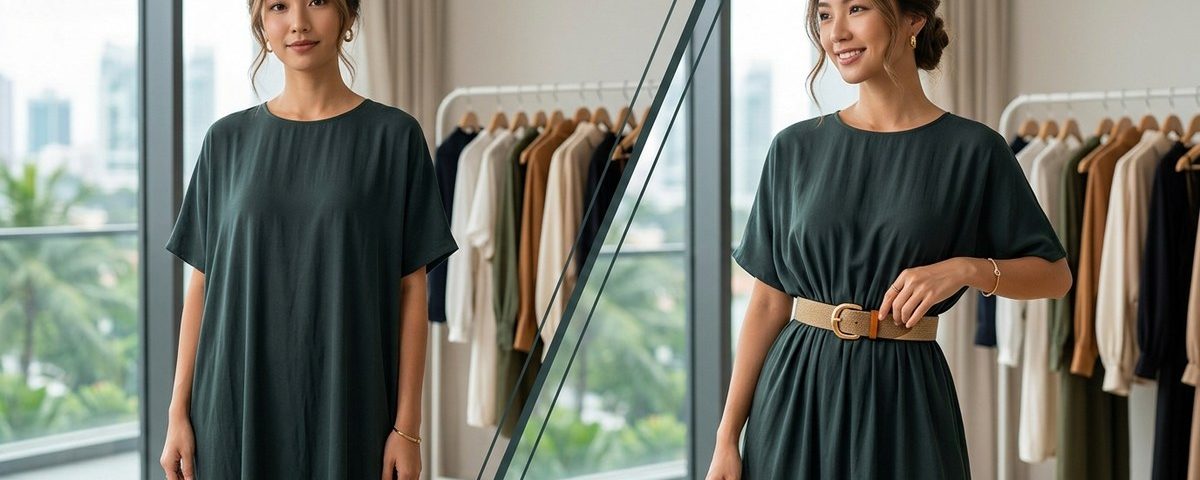
You know that feeling when you slip on a rental dress and it looks… fine? Not bad, but not quite magazine-ready either. The fabric is beautiful, the colour works, but something feels off. Nine times out of ten, the missing piece is structure. And that is exactly what a belt brings to the table.
Belts transform rental outfits by adding definition, creating visual interest, and adjusting proportions without permanent alterations. Master five core techniques: waist cinching, low-slung styling, layered belting, chain accents, and strategic colour blocking. Choose belt width based on dress silhouette, position according to your body type, and always pack your own belt to events. These simple tricks work across weddings, corporate galas, and cocktail parties throughout Singapore.
Why Belts Work Magic on Rental Pieces
Rental dresses come in standard sizes. They fit hundreds of different bodies, which means they rarely fit anyone perfectly.
A belt fixes that instantly.
It creates a waistline where none exists. It breaks up a column of colour. It adds texture contrast. Most importantly, it gives you control over how the dress sits on your frame.
Think about a slip dress in navy silk. Beautiful fabric, timeless cut. But on its own, it can look shapeless. Add a wide leather belt at your natural waist, and suddenly you have an hourglass silhouette. The same dress, completely different impact.
This matters for Singapore events where photos are everywhere. What to wear to a Singapore wedding becomes less stressful when you know how to adjust any rental with one accessory.
Five Belt Styling Tricks That Work Every Time
1. The Classic Waist Cinch
Position a belt at your natural waist, the narrowest part of your torso.
This works best on:
– Shift dresses
– Maxi dresses without defined waists
– Oversized midi styles
– Shirt dresses
Use a medium to wide belt (5-8cm) in a contrasting colour or texture. If your dress is flowy chiffon, try structured leather. If it is tailored linen, consider a woven raffia belt for texture.
The trick is to cinch firmly but not tightly. You want definition, not discomfort. The belt should sit flat against the fabric without buckling or riding up.
2. The Low-Slung Hip Belt
Drop the belt to sit on your hip bones instead of your waist.
This creates a longer torso and works beautifully for:
– Bodycon dresses that need visual breaking
– Monochrome outfits
– Tall frames
– Evening gowns with simple silhouettes
Use a thin to medium belt (2-4cm). Metallic chains work particularly well here. Position it loosely, almost like jewellery rather than structure.
Perfect for cocktail attire events where you want subtle sophistication.
3. The Layered Double Belt
Wear two belts at once, positioned 3-5cm apart.
Sounds bold, but it works when you follow this formula:
1. Start with one thin belt in a neutral (black, tan, gold)
2. Add a second thin belt in a complementary shade
3. Keep both belts similar in width
4. Position them parallel at your natural waist
This technique adds editorial flair to simple rental pieces. It photographs incredibly well and creates the illusion of a custom styled outfit.
4. The Chain-as-Belt Approach
Use a long chain necklace or body chain as a belt.
Loop it twice around your waist and let the ends hang to one side. This works for:
– Minimalist slip dresses
– Satin evening gowns
– Monochrome looks that need sparkle
– Garden party dresses
The metallic element catches light beautifully in photos, especially at evening galas with dramatic lighting.
5. The Colour Block Strategy
Choose a belt in a completely contrasting colour to break up the dress.
If you are wearing a rental in emerald green, try a burgundy belt. Navy dress? Cognac leather belt. Blush pink gown? Black patent belt.
This creates two distinct colour zones and makes the outfit look intentional rather than off-the-rack.
Matching Belt Width to Dress Silhouette
Not all belts work with all dresses. Width matters.
| Dress Type | Recommended Belt Width | Why It Works |
|---|---|---|
| Slip dress, bias cut | Thin (1-3cm) | Maintains the fluid drape |
| A-line midi | Medium (4-6cm) | Balances the flare |
| Maxi gown | Wide (7-10cm) | Creates strong definition |
| Shirt dress | Medium to wide (5-8cm) | Echoes tailored structure |
| Bodycon | Thin to medium (2-5cm) | Avoids bulk |
| Oversized shift | Wide (7-10cm) | Adds necessary structure |
When in doubt, go one size narrower than you think. Wide belts can overwhelm petite frames or delicate fabrics.
Belt Positioning for Different Body Types
Where you place the belt changes everything.
Petite frames: Keep belts at your natural waist to avoid shortening your legs. Avoid drop waist or hip placement unless you are specifically aiming for a relaxed, editorial look.
Tall frames: You can wear belts almost anywhere. Try both high waist and low hip positions to see what feels right for the occasion.
Apple shapes: Position slightly above your natural waist to create a defined waistline. Avoid tight cinching. Look for structured belts that hold their shape.
Pear shapes: Emphasise your waist with medium width belts. This balances your proportions and draws the eye upward.
Rectangle shapes: Use belts to create curves. Wide belts work particularly well to add dimension.
Material and Texture Combinations
Pairing the right belt material with your rental fabric makes the difference between “styled” and “trying too hard.”
For silk or satin dresses:
– Patent leather (adds shine-on-shine glamour)
– Velvet (creates luxe texture contrast)
– Metallic mesh (keeps it light and elegant)
For lace or embroidered pieces:
– Smooth leather (lets the dress detail shine)
– Satin ribbon (soft and romantic)
– Simple metal chain (modern contrast)
For cotton or linen:
– Woven raffia (casual sophistication)
– Braided leather (textural interest)
– Canvas with metal hardware (relaxed polish)
For jersey or knit:
– Structured leather (adds necessary rigidity)
– Wide elastic with statement buckle (comfortable and chic)
Never match texture to texture. If your dress is leather, do not wear a leather belt. The contrast is what creates visual interest.
Common Belt Styling Mistakes to Avoid
Even experienced renters make these errors:
-
Belting over bulky fabric: If your dress has gathering, pleats, or thick seams at the waist, adding a belt creates bulk. Choose dresses with smooth waist areas for belting.
-
Matching belt to shoes exactly: This looks dated. Your belt and shoes can be in the same colour family, but they do not need to be identical shades.
-
Choosing ornate belts with busy dresses: If your rental has embellishment, sequins, or bold prints, keep your belt simple. Let one element be the star.
-
Forgetting to check the back: Turn around and check your rear view. The belt should sit evenly all the way around, not twisted or bunched.
-
Ignoring dress loops: Some rentals have built-in belt loops. Use them. They exist for a reason and will keep your belt positioned correctly all night.
Building Your Belt Capsule for Rentals
You do not need dozens of belts. Five strategic pieces cover most Singapore events.
-
Black leather, medium width: The workhorse. Goes with everything from corporate events to weddings.
-
Tan or cognac leather, medium width: Softens colourful dresses. Perfect for daytime events.
-
Gold chain or metallic, thin: Adds glamour to evening looks without weight.
-
Statement belt with interesting buckle: For when you want the belt to be a focal point. Choose one in a neutral colour with eye-catching hardware.
-
Elastic or stretchy option: Comfort matters. A stretchy belt in black or navy works for long events where you will be sitting, eating, and dancing.
Store these in your rental styling kit alongside safety pins, fashion tape, and other essentials.
Belt Tricks for Specific Singapore Events
Different occasions call for different approaches.
Weddings: Keep it elegant and understated. A slim gold belt on a pastel dress photographs beautifully. Avoid anything too trendy or costume-like.
Corporate galas: Structured leather belts signal polish. Stick to classic widths and neutral tones. The belt should define, not distract.
Garden parties: This is where you can play with texture. Woven belts, braided leather, and fabric options all work for outdoor daytime events. Check out garden party styling for more context.
Cocktail events: Metallic or embellished belts add just enough sparkle. Keep the width thin to medium for a sophisticated rather than costume effect.
Art openings and gallery events: Go editorial. Try the double belt technique or an unexpected colour combination. These events reward creative styling.
Working with Designer Rental Pieces
Some designer dresses come with their own belts. Others are designed to be worn without.
When you rent pieces from brands like Zimmermann or Self-Portrait, check whether a belt is included.
If the dress comes with a matching belt, try it first. But do not feel obligated to use it. Sometimes the designer’s belt is too matchy or does not suit your proportions.
Swap it for one of your own if that works better.
For brands like Aje that often feature flowing silhouettes, adding your own belt can completely transform the look from bohemian to structured.
How to Pack Belts for Events
Belts get forgotten. You remember the dress, the shoes, the bag. The belt stays home.
Prevent this by:
- Laying out your complete outfit the night before, belt included
- Coiling leather belts loosely and securing with a hair tie
- Packing chain belts in a small pouch to prevent tangling
- Taking a backup belt in a neutral colour, just in case
If you are getting ready at the venue, bring two belt options. Lighting and the actual fit of the dress might change your styling plans.
Last-Minute Belt Alternatives
You are at the event. You forgot your belt. The dress needs something.
Try these emergency solutions:
- Long necklace: Loop it twice around your waist and secure with a small safety pin at the back
- Scarf: Fold a silk scarf lengthwise and tie it at your side hip
- Ribbon from the venue: Florists often have beautiful ribbon. A length of velvet or satin ribbon can work as an impromptu belt
- Borrow from a friend: Someone at the event probably has a belt in their bag
“The best accessory is confidence, but the second best is a well-placed belt. It takes five seconds to put on and transforms the entire outfit. I never rent a dress without thinking about how I will belt it.” — Styling advice from a regular StyleLease customer
Caring for Your Belts Between Events
Quality belts last for years if you treat them right.
Leather belts: Wipe with a slightly damp cloth after wearing. Store flat or loosely coiled, never tightly rolled. Condition once or twice a year with leather cream.
Chain belts: Store in individual pouches to prevent scratching. Check clasps and links before each wear.
Fabric or woven belts: Spot clean only. Let air dry completely before storing.
Elastic belts: These have the shortest lifespan. Replace when they lose stretch or the elastic becomes visible through the fabric covering.
Keep belts in a drawer organiser or hanging on hooks. Avoid throwing them in a pile where they can get bent, scratched, or tangled.
Sustainability and the Belt Investment
Buying a few quality belts makes more sense than buying multiple dresses.
One good leather belt costs around SGD 80 to SGD 150. It will work with dozens of rental dresses over years of events.
Compare that to buying a new dress for every occasion. The belt is the smarter investment, both financially and environmentally.
This aligns with the whole philosophy of renting. You are choosing variety and sustainability over ownership. Understanding what happens to rental dresses after you return them shows how the circular fashion model works.
Your personal belt collection becomes the constant. The dresses rotate. You get endless outfit combinations without the environmental cost of fast fashion.
Pulling Your Look Together
Belt styling is not complicated. It just requires thinking one step beyond the dress itself.
Before your next event, stand in front of a mirror with your rental dress and try three different belt positions. High waist, natural waist, low hip. See what changes. Notice how the proportions shift.
Try different widths. Experiment with textures. Take photos from the front and back.
You will quickly develop an eye for what works on your body and what does not. That knowledge transfers to every future rental, making you faster and more confident with each event.
The belt becomes your secret weapon, the simple trick that makes people ask where you bought that amazing dress, never guessing you rented it yesterday and will return it tomorrow.