You’ve got three weddings this year, a corporate gala, and your cousin’s engagement party. That’s five occasions demanding five different designer looks. If you buy a $1,200 dress for each event, you’re looking at $6,000. Rent them instead? You might spend $800 total.
The math seems simple, but the real answer depends on how often you actually wear formal attire, what types of events fill your calendar, and whether you’re the type who rewears outfits without hesitation.
Renting designer dresses makes financial sense if you attend fewer than six formal events yearly. Beyond that threshold, purchasing versatile pieces becomes more economical. Factor in storage costs, alterations, dry cleaning, and resale value before deciding. Your lifestyle, wardrobe rotation preferences, and environmental values all influence which option actually saves you money long term.
The True Cost Breakdown for Singapore Event Goers
Let’s start with real numbers from the Singapore market.
A Self-Portrait lace midi dress retails for around $800 to $1,200 at department stores. Renting the same piece costs $120 to $180 for a four-day period.
That means you’d need to wear your purchased dress at least five to seven times before the cost per wear drops below rental rates.
Here’s where most people miscalculate. They forget about the hidden costs that come with ownership.
Additional expenses for purchased dresses:
- Professional dry cleaning after each wear: $15 to $30
- Alterations for perfect fit: $50 to $150
- Storage solutions in compact Singapore homes: ongoing
- Insurance for high-value pieces: optional but recommended
- Depreciation if you plan to resell later: 40% to 60% value loss
Rental services absorb all these costs. You pay one flat fee, wear the dress, return it, and you’re done.
The styling accessories often come included too. Many rental platforms provide matching clutches or jewellery as part of the package.
When Renting Makes Perfect Financial Sense
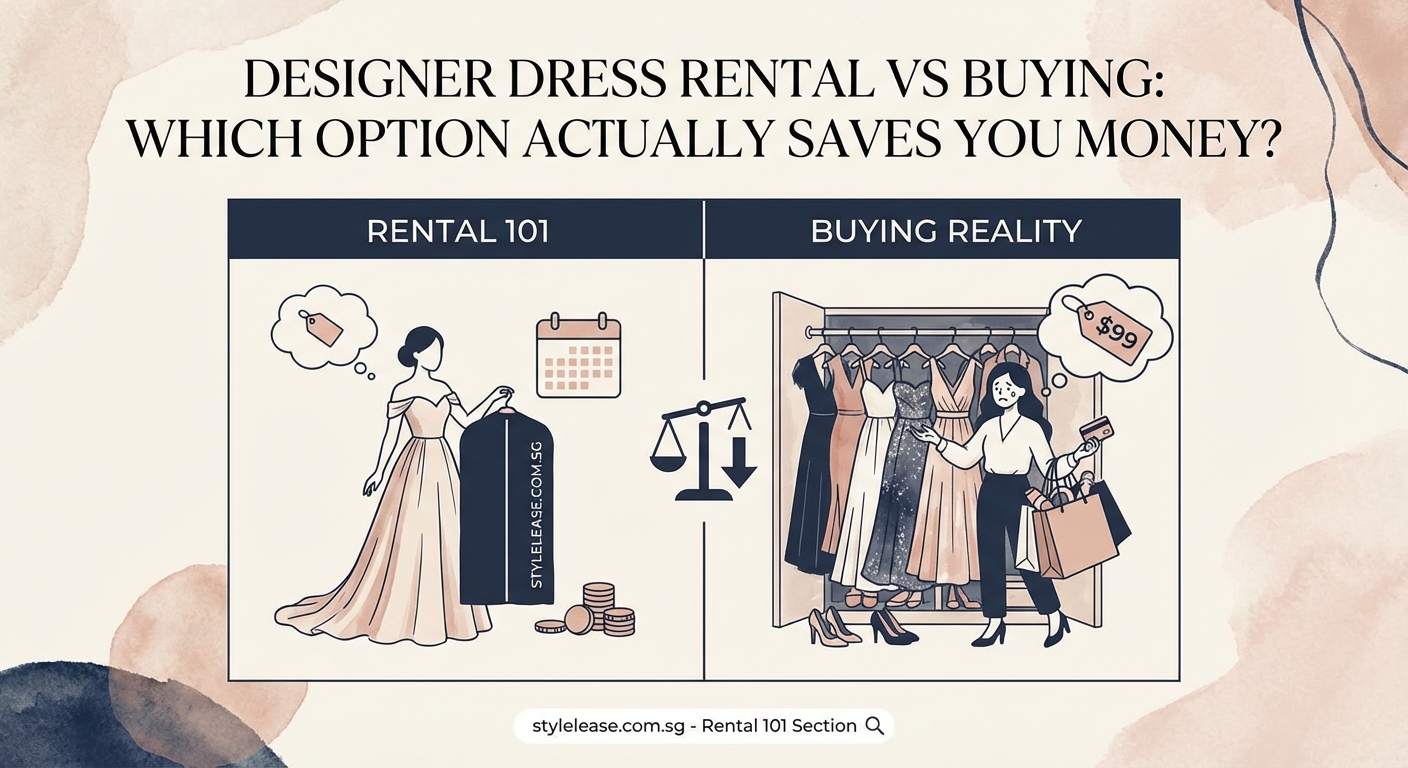
Certain situations make renting the obvious winner.
You attend formal events sporadically, maybe two to four times a year. The occasions vary wildly in dress code, from cocktail attire decoded events to black-tie galas. You hate wearing the same outfit twice in front of the same social circle.
Your body measurements fluctuate throughout the year. Pregnancy, weight training, or simple seasonal changes mean your size isn’t consistent. Renting lets you select the perfect fit each time without committing to a single size.
You’re building your career and your style is still evolving. What feels perfect at 25 might look dated at 30. Renting gives you access to current trends without the regret of outdated purchases hanging in your wardrobe.
Storage space is limited. Singapore apartments don’t offer sprawling walk-in closets. Designer gowns with delicate fabrics require proper hanging space and climate control. Renting eliminates this problem entirely.
“I used to buy a new dress for every wedding. Then I calculated that I’d spent $4,000 in one year on dresses I wore once. Now I rent exclusively and spend maybe $600 annually for the same number of events. The savings fund my actual holidays instead.” – Rachel, 32, Marketing Director
The Tipping Point Where Buying Becomes Smarter
Ownership starts making sense when your event frequency crosses a certain threshold.
If you’re attending six or more formal occasions yearly, especially if they’re spread across different social groups who won’t see outfit repeats, purchasing becomes economical.
Here’s the calculation. A versatile designer dress at $1,000, worn six times, costs $167 per wear before any additional expenses. After dry cleaning costs of $20 per wear, you’re at $187 per wear. Still cheaper than most rental rates of $150 to $200.
The dress also holds resale value. Platforms like Carousell and dedicated consignment stores let you recoup 30% to 50% of your purchase price if the piece is well maintained and from a desirable brand.
Certain dress styles work harder in your wardrobe. A classic black column gown fits multiple dress codes. It works for corporate events, evening galas, and even Singapore weddings depending on how you accessorise it.
You can also alter purchased dresses to refresh their look. Shortening a gown to midi length, changing the neckline, or adding sleeves gives you a “new” dress for a fraction of the rental cost.
| Scenario | Annual Events | Best Choice | Estimated Annual Cost |
|---|---|---|---|
| Occasional guest | 1-2 events | Rent | $240-$360 |
| Regular attendee | 3-5 events | Rent or buy 1-2 versatile pieces | $450-$900 |
| Frequent guest | 6-8 events | Buy 2-3 core pieces, rent statement items | $800-$1,200 |
| Wedding party regular | 9+ events | Buy versatile collection | $1,500+ (first year), then minimal |
The Hidden Costs Nobody Talks About
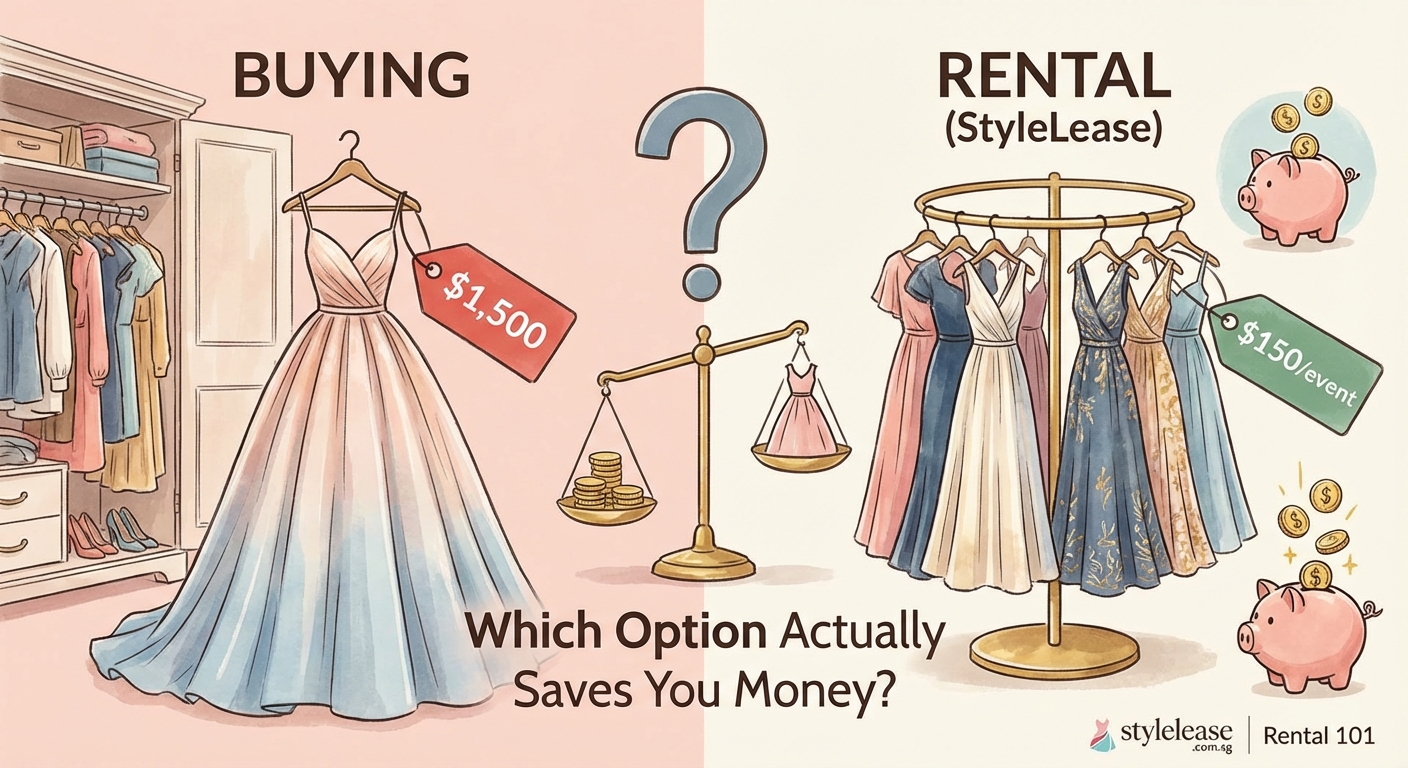
Both options carry expenses that don’t appear in the initial price tag.
Rental hidden costs:
- Late return fees if your event runs longer than expected
- Damage deposits that might not be fully refunded
- Shipping fees if you’re not collecting in person
- Rush fees for last-minute bookings
- Limited size availability during peak wedding seasons
Purchase hidden costs:
- Opportunity cost of capital tied up in rarely worn items
- Depreciation from changing fashion trends
- Emotional attachment preventing resale
- Storage solutions for delicate fabrics
- Maintenance between wears even when not using the dress
The emotional factor matters too. Purchased dresses can trigger guilt when they sit unworn. You’ve invested money, so you feel pressure to create occasions to wear them. This leads to awkward outfit choices where you’re overdressed just to justify the purchase.
Rentals eliminate this guilt completely. You wore it, you loved it, you returned it. No lingering wardrobe baggage.
How to Calculate Your Personal Break-Even Point
Stop guessing and start calculating with real data from your own life.
-
Count your formal events from the past 12 months. Include weddings, galas, corporate dinners, and any occasion requiring designer-level attire.
-
Estimate your next 12 months. Factor in known events plus a buffer for unexpected invitations. Singapore’s wedding season runs heavily from March to June and September to November.
-
Assess your outfit repeat comfort level. Can you wear the same dress to different friend groups? Do people in your circle notice or care about repeats?
-
Calculate the rental cost. Multiply your annual event count by the average rental price in your preferred style range ($150 to $200 is typical for mid-range designer pieces).
-
Calculate the purchase cost. Price out two to three versatile designer dresses that cover different formality levels. Add 20% for alterations and maintenance.
-
Compare the totals. If rental costs exceed purchase costs by more than 30%, buying makes financial sense. If they’re within 30% of each other, factor in your storage situation and style evolution to make the final call.
The break-even point for most Singapore women sits around five to six events annually, assuming rental rates of $150 and purchase prices around $1,000 per dress.
Smart Hybrid Strategies That Maximize Value
You don’t have to choose one approach exclusively.
Many savvy dressers maintain a small core wardrobe of purchased versatile pieces and rent statement items for special occasions.
Your owned collection might include:
- One black floor-length gown for formal galas
- One midi dress in a neutral tone for cocktail events
- One versatile jumpsuit that works across dress codes
You’d rent for:
- Weddings where you want to wear colours that photograph beautifully
- Theme-specific events like garden parties requiring particular fabrics
- Trend-driven pieces you love but know won’t have staying power
- Designer brands you want to experience without the commitment, like Zimmermann or Self-Portrait
This approach gives you the reliability of owned pieces while keeping your look fresh and current through strategic rentals.
Another smart move is buying second-hand designer pieces at 50% to 70% off retail, wearing them for a season or two, then reselling at minimal loss. Your effective cost per wear can drop to $30 to $50 for pieces you wear multiple times.
The Sustainability Factor Changes the Equation
Environmental impact adds another dimension to this decision.
The fashion industry produces 10% of global carbon emissions. A single designer dress can require hundreds of litres of water and generate significant textile waste during production.
When you rent, you’re participating in circular fashion. One dress serves dozens of wearers instead of sitting unused in individual wardrobes. The environmental cost per wear drops dramatically.
Purchased dresses often end up in landfills after minimal use. Singaporeans discard an estimated 168,000 tonnes of textile waste annually, with much of it coming from special occasion wear that no longer fits or feels current.
If environmental values matter to you, that tips the scale toward renting even when the pure financial calculation might favour buying. You can learn more about what happens to rental dresses after you return them to understand the full lifecycle.
Some rental services also prioritise eco-friendly fabrics, letting you make sustainable choices without sacrificing style.
Common Mistakes That Waste Money Either Way
People make predictable errors regardless of which option they choose.
Rental mistakes:
- Booking the wrong size because you didn’t check measurements properly
- Missing return deadlines and paying late fees
- Renting for events you could have skipped or worn something you already own
- Choosing rental pieces so trendy they look dated in photos within a year
- Not reading damage policies and getting charged for normal wear
Purchase mistakes:
- Buying dresses that only work for one specific dress code
- Choosing colours or prints that limit versatility
- Purchasing without trying on and then paying for extensive alterations
- Keeping dresses you never wear because of sunk cost fallacy
- Buying multiple dresses in the same style category
The biggest mistake is not tracking your actual wearing patterns. Keep a simple note on your phone logging each formal event, what you wore, and whether it was rented or owned. After 12 months, you’ll have concrete data to guide future decisions instead of relying on assumptions.
Making Your Decision With Confidence
Your choice between renting and buying designer dresses isn’t permanent.
Start with renting if you’re unsure about your event frequency or style preferences. Use it as a testing ground. After a year, review your spending and satisfaction levels.
If you found yourself renting the same style repeatedly, that’s a signal to purchase. If you loved trying different looks each time, stick with renting.
Your life stage matters too. Someone in their late twenties attending multiple weddings annually has different needs than someone in their forties with an established social calendar and defined personal style.
The financial sweet spot often involves owning two to three reliable pieces and renting everything else. This gives you security for last-minute events while keeping your look current and your wardrobe manageable.
Understanding the real costs helps you budget accurately whether you’re renting or buying. Don’t forget to account for accessories, alterations, and maintenance in your calculations.
Your Wardrobe Strategy Starts Today
The renting versus buying question isn’t about finding one universal answer. It’s about understanding your specific situation and making choices that align with your event frequency, storage capacity, environmental values, and financial goals.
Track your formal events for the next quarter. Note what you wore, how much it cost, and how you felt about the choice. That real-world data will guide you better than any general advice. Whether you end up with a carefully curated rental strategy or a small collection of versatile purchased pieces, you’ll know the decision was right for your life.