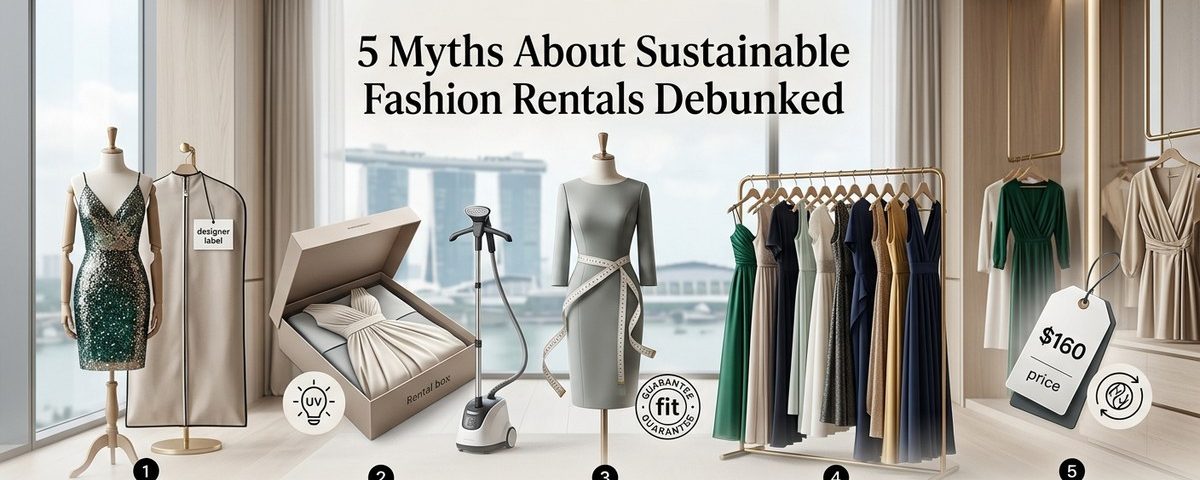
You already know the Singapore calendar is packed: wedding season, gala dinners, corporate year-end parties, and the occasional black-tie event at Marina Bay Sands. You want to look stunning without buying a gown that will sit in your wardrobe for years. That is why fashion rental makes so much sense. But then the doubts creep in. Is renting really sustainable? Or is it just another marketing trick? You are not alone in wondering. Many eco-conscious women in Singapore have heard conflicting claims about fashion rental and the environment. Let us set the record straight. We are cutting through the noise to show you the real impact of renting designer dresses, and why it might be the greenest choice you make all year.
Fashion rental is often misunderstood as a greenwashing gimmick, but the data and real-world practices tell a different story. Renting a designer dress for a single event can save hundreds of litres of water and prevent textile waste. When you choose a responsible rental service in Singapore, you are actively supporting a circular economy, reducing demand for new production, and extending the life of beautiful garments. The myths around cleaning, cost, and convenience do not hold up under scrutiny. Renting is not just stylish; it is one of the most impactful sustainable fashion choices available today.
Myth One: Renting Clothes Is Just as Wasteful as Buying Fast Fashion
This is the biggest misconception we hear. People think that because a dress gets rented multiple times, it must generate the same carbon footprint as mass-produced fast fashion. That logic ignores a fundamental rule of sustainability: the most eco-friendly garment is the one that already exists.
When you rent a gown, that single piece is used by many women over its lifetime. Each rental replaces the need for a new purchase. According to a 2021 study by the Ellen MacArthur Foundation, extending the active life of a garment by just nine months can reduce its carbon and water footprint by 20 to 30 percent. Renting goes further. A single designer dress can circulate for years, serving dozens of events. In contrast, a fast-fashion dress bought for a one-night occasion often ends up in a landfill within months.
“The rental model directly tackles overproduction, which is the root cause of fashion’s environmental damage. Every time someone rents instead of buying new, they are essentially voting against waste.” – Circular Fashion Institute, Singapore
And yes, there is the transport and cleaning involved. But studies from the Sustainable Apparel Coalition show that even when factoring in dry cleaning and shipping, rental can still have a lower overall environmental impact than manufacturing a new garment from scratch, especially for occasion wear that is only worn once.
Myth Two: Cleaning Rental Dresses Uses Too Much Water and Chemicals to Be Sustainable
A common worry among environmentally conscious consumers: “If every rental dress is dry-cleaned before it reaches me, isn’t that terrible for the planet?” The answer depends on the rental service. Responsible companies like Style Lease prioritise eco-friendly cleaning methods.
Here is a comparison of typical cleaning approaches:
| Cleaning Method | Water Usage | Chemical Impact | Energy Use | Rental Suitability |
|---|---|---|---|---|
| Traditional dry cleaning | Low | High (perchloroethylene) | Moderate | Standard but not eco-friendly |
| Wet cleaning (water-based) | Moderate | Low (biodegradable detergents) | Low | Great for many fabrics |
| Green dry cleaning (liquid CO2 or silicone) | Very low | Very low | Moderate | Best option for delicate gowns |
| Steam cleaning + spot treatment | Minimal | Minimal | Low | Ideal for lightly worn pieces |
Most professional rental services in Singapore now use some combination of green dry cleaning and steam sanitisation. These methods remove bacteria and odours without harsh chemicals. At Style Lease, we partner with cleaners who follow the certified “Eco-Clean” protocol, which uses biodegradable solvents and recycles water. The result: a spotless gown that is safe for you and the planet.
Also consider the alternative. When you buy a new polyester dress (which most fast fashion is made of), the production process releases microplastics into waterways and uses enormous amounts of water for dyeing. A rental dress has already been dyed. The cleaning cycle, even if it uses some water, is far less harmful than the virgin production process.
Myth Three: Renting Is Too Expensive for the Environment to Matter
Some people argue: “If I spend so much money on renting a designer dress, I could just buy a cheaper one. What difference does it make?” This confuses cost with environmental impact. The price of a rental does not determine its sustainability. What matters is the number of times a garment is worn relative to its production footprint.
A $60 fast-fashion dress worn once and thrown away has a much higher per-wear footprint than a $200 rental dress worn by ten different women.
Let us break down how rental reduces your carbon footprint:
- One rental replaces one purchase. Every time you rent, you prevent the demand for a new item to be manufactured. That saves the resources (water, energy, raw materials) needed to make that dress from scratch.
- Rental extends the life of high-quality garments. Designer pieces are built to last. By renting them repeatedly, we maximise the value of the materials and craftsmanship already invested.
- Rental reduces textile waste. In Singapore, we send about 150,000 tonnes of textile waste to incineration each year. Renting helps keep clothes in use longer, delaying their journey to the waste stream.
- Rental supports a sharing economy. Instead of each household owning a formal gown that sits idle 99% of the time, one dress serves many. This collective use is inherently efficient.
- Rental encourages mindful consumption. When you rent, you plan ahead, choose deliberately, and return the item. This reduces the impulse buying that fuels overconsumption.
For Singapore’s busy social calendar, renting is both practical and planet-friendly. You get to wear a stunning Zac Posen or Oscar de la Renta gown without adding to the mountain of barely-worn clothes in landfills. For more on this, check out our guide on why renting designer dresses is the most sustainable fashion choice in Singapore.
Myth Four: Buying Second-Hand Is More Sustainable Than Renting
Some shoppers feel virtuous about buying pre-loved pieces from thrift stores or platforms like Carousell. That is fantastic. Second-hand is a great way to extend a garment’s life. However, renting offers unique benefits that thrifting cannot always provide.
Consider this:
- Variety for specific events. Thrift stores are treasure hunts. You might find a gem, but you cannot guarantee it will fit the dress code for a black-tie gala at The Ritz-Carlton or a garden party at the Botanic Gardens. Rental services curate collections specifically for occasions.
- Higher quality and designer access. Rentals let you wear luxury pieces that would otherwise be out of reach. You can try a different silhouette for every event without committing to a costly purchase.
- Zero closet clutter. With second-hand buying, you still end up with physical items that take up space. Renting means the dress goes back after the event. No storage issues, no guilt about owning too many clothes.
- Professional cleaning included. When you buy second-hand, you often need to arrange cleaning or repairs yourself. Rental services handle that for you, ensuring the garment is in perfect condition each time.
Both second-hand and rental are part of the circular fashion movement. But for Singapore’s high-stakes event scene, renting often wins on convenience and style. If you are curious about building a zero-waste wardrobe, we explain 7 ways fashion rental helps you build a zero-waste wardrobe.
Myth Five: Renting Is Just a Passing Trend, So It Cannot Be a Real Solution
There is a lingering belief that fashion rental is a fad, like those subscription boxes from a few years ago that fizzled out. But the numbers tell a different story.
The global fashion rental market was valued at over $2 billion in 2025 and is projected to grow at 10% annually through 2030, according to Research and Markets. In Singapore, the trend is even more visible. With our limited living space and high environmental awareness, rental has become a mainstream option for everything from wedding gowns to corporate cocktail dresses.
Moreover, rental is not just a consumer trend. Major fashion houses are embracing it. Brands like Self-Portrait, Reformation, and Zimmermann now have dedicated rental partnerships or their own rental platforms. This shows that the industry itself sees rental as a viable, long-term business model, not a gimmick.
If you are still sceptical, look at the environmental data. Renting is one of the few consumption models that directly reduces the number of new garments produced. In a world where the fashion industry accounts for 10% of global carbon emissions, anything that lessens demand for new production is a real, lasting solution.
How to Spot a Truly Sustainable Rental Service
Not all rental companies are created equal. Some may greenwash their operations. Here is how you can tell if a rental service is genuinely eco-friendly:
- Transparency about cleaning methods. A good service will tell you how they clean their garments and what chemicals they use. Ask about wet cleaning or CO2 cleaning.
- Sustainable packaging. Do they send gowns in single-use plastic bags? Look for services that use reusable garment bags or recycled cardboard.
- Local operations. A rental service based in Singapore reduces shipping emissions compared to one that flies dresses from overseas. Support local.
- Repair and maintenance policy. Sustainable rental means keeping dresses in circulation as long as possible. Ask if they repair minor damage instead of discarding gowns.
- End-of-life plan. What happens to dresses that are too worn to rent? A responsible company will donate fabric or recycle materials.
At Style Lease, we follow all these practices. Every gown is inspected after each rental, professionally repaired if needed, and cleaned with eco-friendly methods. For more details on our process, read what happens to rental dresses after you return them.
The Truth Is Clear: Fashion Rental Is a Real Solution
We have walked through the five most persistent myths about sustainable fashion rentals. Each one crumbles under honest examination. Renting does not waste more resources than buying. Cleaning can be done responsibly. The cost is justified by the impact. Second-hand and rental are allies, not rivals. And rental is here to stay.
For the environmentally conscious woman in Singapore, fashion rental is one of the simplest ways to reduce your fashion footprint without sacrificing style. You get to wear a breathtaking gown to that wedding at Capella Singapore or that charity ball at Raffles Hotel, knowing you are part of the solution, not the problem.
So the next time someone tells you renting is not truly sustainable, you can smile and confidently share what you have learned. Better yet, show them by booking your next rental with us. Your wardrobe (and the planet) will thank you.