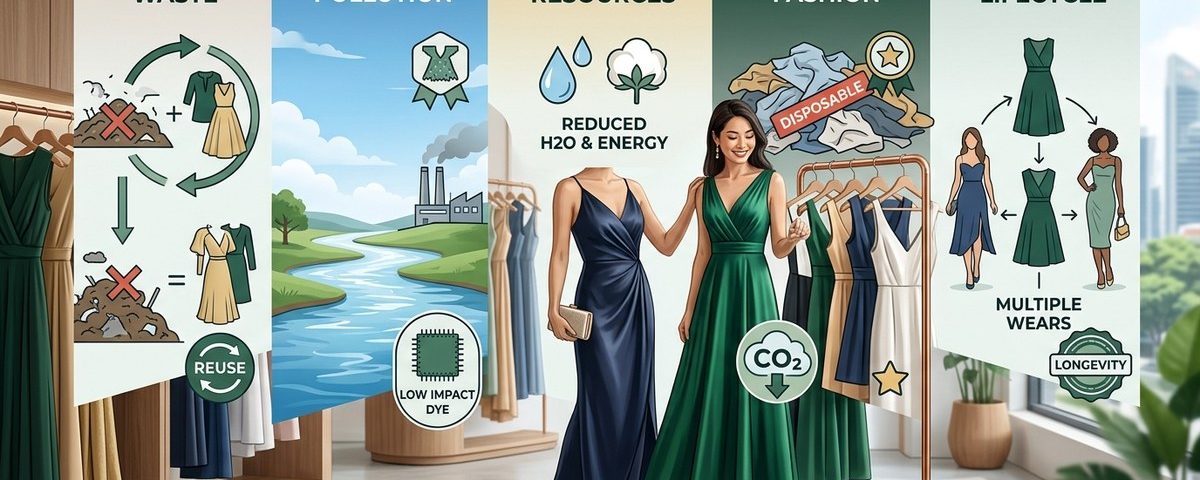
When you think about the environmental cost of your wardrobe, what comes to mind? Perhaps the water used to grow cotton, or the plastic microfibers washed down the drain after a night out. Most people assume that buying secondhand or wearing what you already own is the greenest route. But fashion rental is quietly doing something far more surprising: it is tackling the hidden, invisible parts of fashion’s footprint that even your own closet cannot fix. In a city like Singapore, where event season runs year round and storage space is at a premium, renting is not just convenient. It is a powerful climate action tool hiding in plain sight.
Fashion rental reduces environmental impact in ways that go beyond individual garment use: it lowers the number of new items produced, cuts transportation emissions by consolidating logistics, extends the useful life of designer pieces, and keeps clothing out of incineration. For Singaporeans juggling a packed social calendar with tight HDB wardrobes, renting is one of the most effective ways to look great while staying light on the planet.
The Water We Save Without Even Trying
The fashion industry drinks more water than most people realise. A single cotton t-shirt requires around 2,700 litres of water to produce. A silk evening gown? That figure can climb to over 10,000 litres. When you rent a gown instead of buying it new, you are not just borrowing a dress. You are preventing the need for a new one to be manufactured. That saving happens even if the dress was made years ago.
Rental platforms keep garments circulating. Instead of a dress sitting in someone’s wardrobe after one wear, it gets used ten, twenty, even fifty times. The water that would have been used to produce ten new dresses is spared. In Singapore, where water is a precious resource imported from Malaysia, every litre counts.
| Fashion Choice | Water Used (per wear) | Notes |
|---|---|---|
| Buying a new polyester dress | ~500 litres | Synthetic fibres still require water in dyeing and finishing |
| Buying a new cotton maxi dress | ~2,700 litres | Cotton is extremely water intensive |
| Renting a pre owned designer dress | ~10 litres | Only cleaning water, shared across multiple uses |
| Wearing a dress you already own | 0 litres | But still contributes to your existing wardrobe’s footprint |
The numbers show that renting can slash water consumption by 99% per wear compared to buying new. That is a staggering difference, especially when you consider the average Singaporean woman attends up to six formal events a year. Six new dresses equals tens of thousands of litres. Six rentals equals the water from a single shower every time.
Preventing Textile Waste Before It Starts
We are all familiar with the image of a landfill overflowing with clothes. But what about the waste that never reaches the bin? Textile waste begins the moment a garment is cut from the roll. Manufacturing leftovers, unsold stock, and sample pieces all become waste before a single customer tries them on.
Renting fights this upstream waste in a direct way. Here is the process that happens behind the scenes at a rental service like StyleLease:
- A garment is sourced either directly from a designer or from a previous owner.
- It is inspected for quality and durability. Only pieces that can withstand multiple wears are accepted.
- The dress is cleaned and stored in a climate controlled facility (no need for disposable packaging).
- You book it for your event and wear it for a few days.
- You return it, and the cycle repeats.
Because rental services prioritise longevity over disposability, they naturally avoid the cheap, throwaway fabrics that dominate fast fashion. They also reduce the need for retail floor space, mannequins, and shopping bags. Every rented dress means one less item that had to be manufactured, packaged, and transported to a store in Orchard Road only to be marked down and eventually discarded.
Cutting Carbon Through Sharing Logistics
Transportation is usually associated with shipping emissions from factories in Bangladesh or China. But the carbon footprint of a dress does not end when it arrives in Singapore. The final mile of delivery, the plastic bags, the return trips, and the energy used in retail stores add up.
Rental services change this model dramatically. Instead of each person buying a dress from a different store, receiving it in a separate package, and potentially driving across the island to pick it up, rental platforms centralise inventory and delivery. A single van can drop off twenty dresses for twenty different customers across the same neighbourhood, using a fraction of the fuel that twenty individual shopping trips would require.
“The most sustainable garment is the one that is already made. Fashion rental is not a perfect solution, but it is one of the most scalable ways to reduce the industry’s carbon intensity in dense urban environments like Singapore.” Dr. Li Wei, environmental researcher at the National University of Singapore.
In addition, rental services often use reusable garment bags and cardboard boxes that are collected and reused. No more single use poly mailers. No more bubble wrap. The carbon savings per rental can be as high as 80% compared to buying a brand new dress from a store.
Extending Garment Lifecycles in a Tropical Climate
Singapore’s humidity is not kind to clothing. Mould, sweat stains, and fading can ruin a dress after a few wears. Many women find that a gown they bought for a wedding just two years ago now looks tired and yellowed. Instead of forcing you to wear a damaged garment, or worse, throwing it away and buying another, rental services handle the maintenance professionally.
Professional cleaning extends the life of a dress by many cycles. A gown that would have been discarded after three wears by an owner can be rented out fifteen times before it shows any sign of wear. This means the same dress serves fifteen occasions, each time looking brand new.
- Rental services inspect every dress after each use for rips, stains, and worn elastics.
- They perform spot cleaning and gentle pressing instead of harsh industrial laundering.
- Minor repairs are done in house, keeping the dress in circulation.
- When a dress finally reaches the end of its rental life, it is donated or upcycled rather than incinerated.
This maintenance loop is impossible for an individual to replicate at home. By renting, you are essentially outsourcing the care of your wardrobe to experts who maximise its lifespan. That is good for your wallet and great for the planet.
Shifting Mindsets from Ownership to Access
This might be the most surprising benefit of all. Renting changes how you think about clothes. Instead of viewing a dress as a long term investment that you must wear until it disintegrates, you start seeing it as a temporary tool for a specific moment. That shift in mindset reduces the pressure to buy cheap, trendy pieces that fall apart.
When you rent, you naturally start choosing higher quality items. You become more selective about what you actually wear. You stop accumulating “just in case” dresses that hang untouched in your wardrobe for years. This behaviour ripple effect is called the “service economy” shift, and it is one of the most powerful drivers of sustainable consumption.
In Singapore, where event culture is vibrant from Chinese New Year to the Grand Prix, renting allows you to respect your budget and the planet simultaneously. You no longer need to buy a new outfit for every occasion. You can rent a stunning Alex Perry gown for a gala and a sleek Self Portrait dress for a wedding, then return them both without guilt. The environmental impact is far lower than buying either.
Renting also encourages you to experiment with styles you would never commit to purchasing. That red sequin number you would be too scared to wear more than once? Rent it. That floor length velvet gown for the Christmas party? Rent it. You get the variety without the waste.
A Balanced Look at the Trade Offs
No system is perfect. Rental services still require energy for cleaning, transportation, and packaging. If you live far from the pickup point and drive a car, the emissions from that trip could offset some of the savings. Similarly, if you rent a dress and then decide to buy a different dress anyway, you have not actually reduced consumption.
To maximise the positive impact, keep these guidelines in mind:
- Rent for events you know you will attend. Do not rent just for the sake of it.
- Choose a rental service that uses eco friendly cleaning methods.
- Plan ahead to avoid premium delivery options that increase transport emissions.
- Combine rentals with friends or family for the same event to share logistics.
When used thoughtfully, fashion rental easily beats the environmental performance of buying new, especially for occasion wear that is only worn a few times before being retired.
The Bigger Picture for Singapore’s Fashion Future
Imagine if every woman in Singapore rented her formal wear instead of buying it. The reduction in water usage would be enough to fill Marina Bay. The waste prevented would shrink the volume of textiles sent to incineration plants. And the carbon savings would equal taking thousands of cars off the road during the peak wedding season.
That future is not a fantasy. It is already happening. With each rental, you are voting for a different way of consuming fashion. You are proving that style does not have to cost the earth.
As you plan your next event, consider the hidden environmental wins of renting. You will look amazing, save money, and sleep better knowing that your outfit did not come at the expense of clean water or a stable climate. And the best part? You never have to worry about what to do with that dress afterward. Just return it, and let the cycle continue.
Ready to see the impact for yourself? Browse our collection of designer pieces and book your next rental. Your wardrobe and the planet will thank you.